Bathroom
12 Small Bathroom Ideas on a Budget That Look Surprisingly Expensive
Refresh a small bathroom without a costly remodel. Explore 12 budget-friendly bathroom ideas for curtains, mirrors, paint, towels, tile care and more.
- Published
- November 15, 2026
- Reading time
- 18 minutes
- By
- NorahDecor Editorial
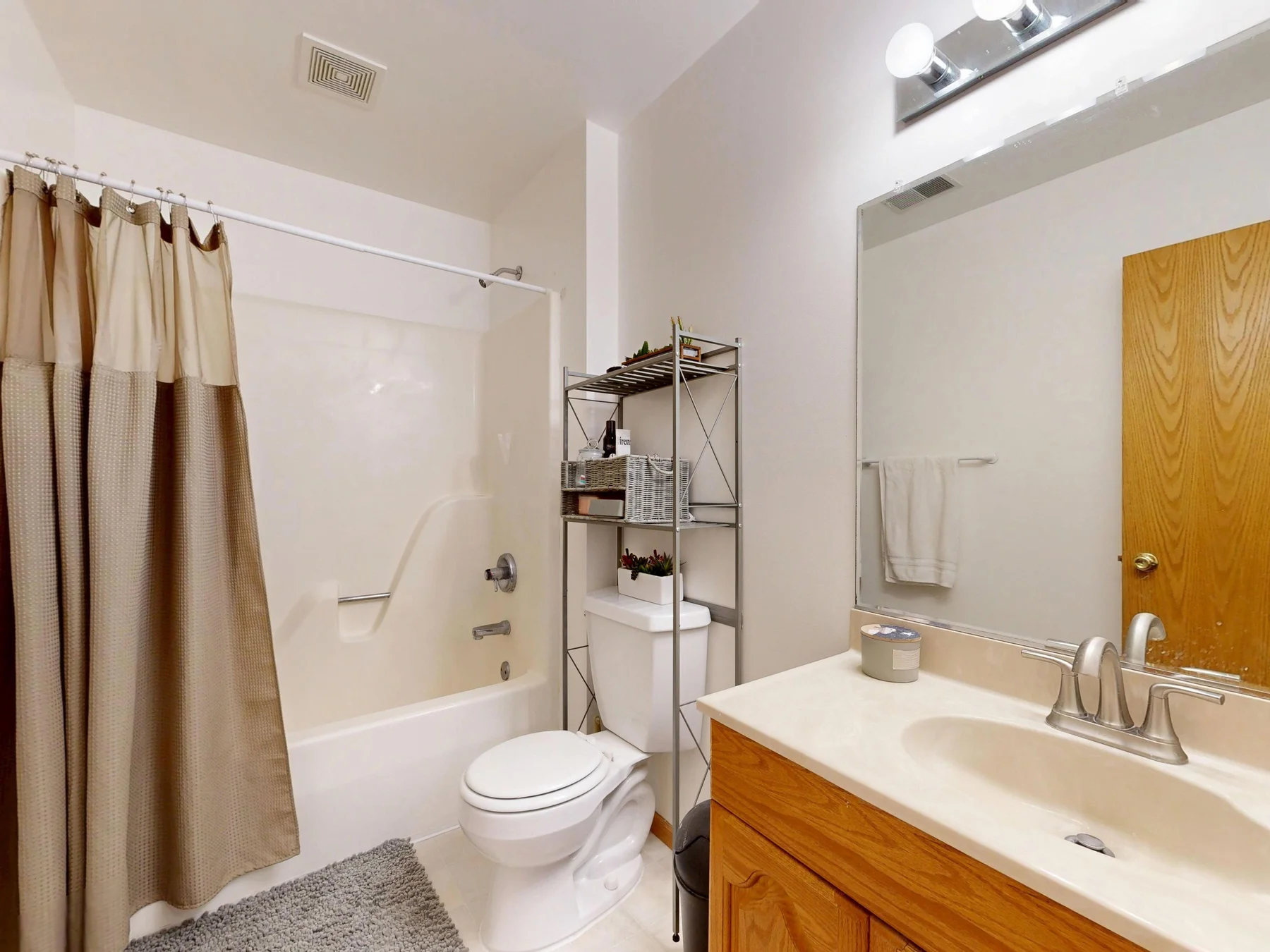
A small bathroom can feel tired long before anything in it actually needs replacing. The shower curtain hangs a little awkwardly, the mirror doesn't quite suit the sink, and the countertop holds more products than you use in a week. None of those problems requires a new vanity or a tile demolition project.
The most useful small bathroom ideas on a budget start with what you can keep. A well-sized curtain changes a large part of the room at once. A fresh wall color can bring together mismatched finishes. Better lighting and a few thoughtfully chosen accessories can make the bathroom more pleasant without sacrificing the space you need to get ready.
This guide covers twelve realistic updates, from changes you can make in an afternoon to slightly more involved projects for homeowners or renters with permission. The goal isn't to make a bathroom look like a luxury hotel. It's to help a real, frequently used room feel more intentional, cleaner, and easier to live with.
Before you spend: do a ten-minute bathroom check
Stand in the doorway and look at the entire room, rather than focusing on one product you want to buy. Ask yourself:
- What actually looks worn? A stained curtain liner, tired caulk, dull lighting, or a cluttered counter may be more noticeable than the color of the vanity.
- What is only a style preference? A dated mirror can be perfectly functional. You may decide to keep it and change the pieces around it.
- What needs maintenance? Leaking plumbing, persistent dampness, peeling paint, mold, loose tile, and faulty wiring are not decorating problems. Deal with their causes before covering them up.
- What can you change legally? If you rent, check your agreement and request approval before painting, drilling, swapping fixtures, or applying adhesive products.
- What must stay accessible? The door, toilet, shower controls, outlets, ventilation fan, and cleaning access should still work after you add anything.
Choose one main visual change and one supporting change. For instance, a textured shower curtain and a warm-toned bath mat may be enough. Buying six unrelated accessories usually creates more work and less impact.
Set a spending cap before shopping
These are illustrative project budgets, not guaranteed retail prices. Local prices and installation costs will vary.
| Your spending cap | Where to focus | | --- | --- | | Up to $25 | Declutter, clean what you already own, swap a small accessory, or refresh a simple hand towel. | | $25–$75 | Choose one noticeable item, such as a curtain, washable mat, matching towel set, or a small framed print. | | $75–$150 | Combine a larger visual update with a few details, or purchase paint and supplies for an approved, suitable wall project. | | $150–$300 | Consider a thoughtfully selected mirror or approved hardware changes, accounting for any professional labor separately. |
You don't have to spend the maximum in a band. The strongest budget refresh often leaves existing fixtures in place.
1. Start with a shower curtain that changes the whole room
In a bathroom with a tub-shower combination, the curtain is one of the largest visible surfaces. Changing it can shift the atmosphere more than replacing several small accessories. A simple woven-look curtain softens glossy tile, while a narrow stripe can introduce pattern without feeling busy.
Choose a color that works with the finishes you cannot change. Warm white can bring some calm to an older bathroom with several shades of beige. Deep olive, dusty blue, or muted rust can give an otherwise plain room a stronger personality. If you prefer a playful look, use one pattern and keep the other textiles quieter.
Make it functional: Measure the rod height and width before shopping. Use a suitable liner where necessary, keep the curtain inside the tub while showering, and allow the fabric and liner to dry between uses. A beautiful curtain that stays damp or puddles on the floor is not an improvement.
Budget move: Try a different curtain and the hardware you already have before buying a new rod or a full matching set.
2. Paint the parts of the room that are actually suitable for paint
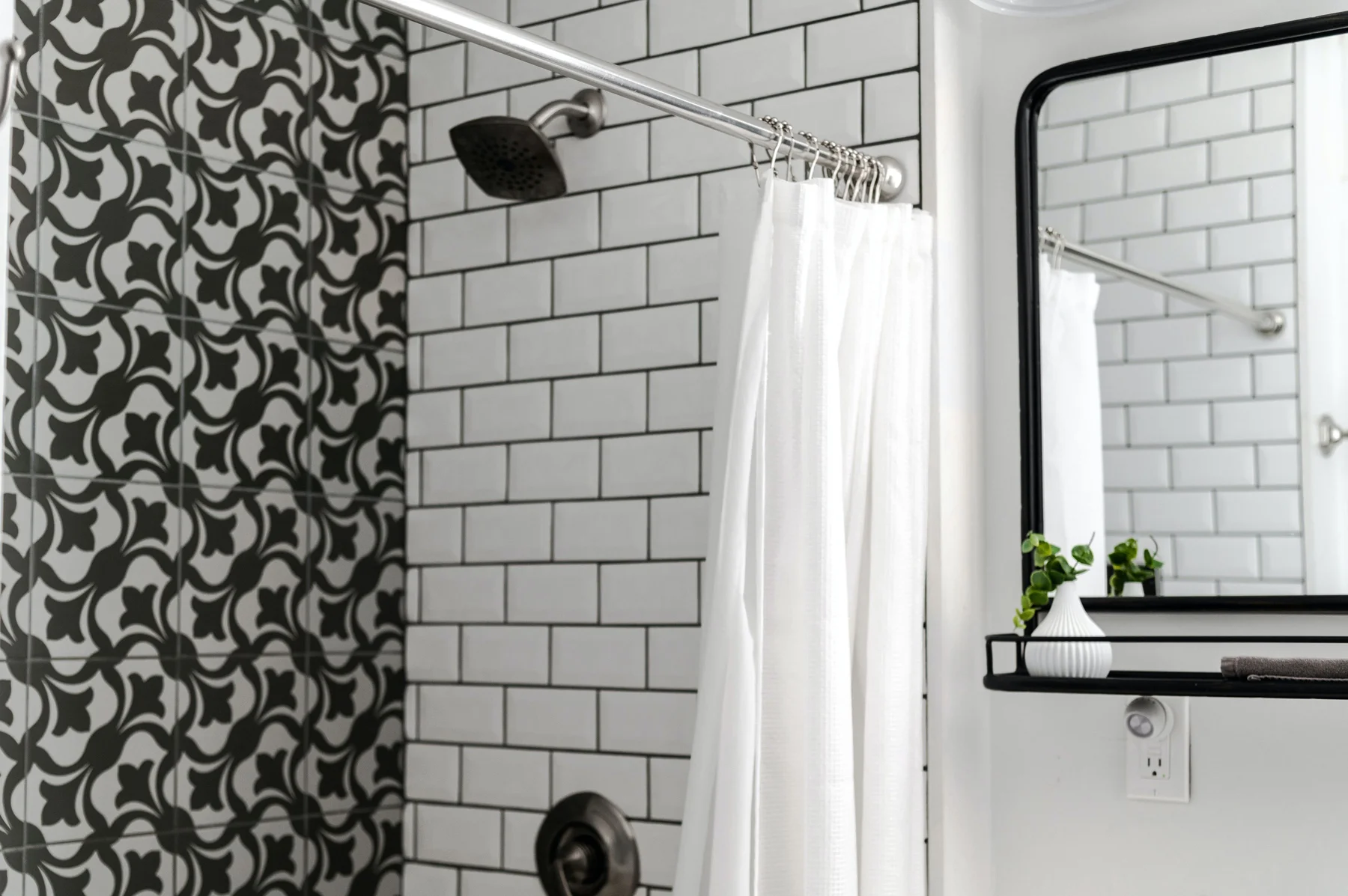
Paint can tie together an awkward mix of tile, cabinetry, and flooring. In a small bathroom, even one wall or a ceiling with sound, properly prepared surfaces can make the room look more coherent.
Rather than choosing the palest color automatically, look at what's already there. A warm off-white may work better with cream tile than a stark, cool white. A muted green can complement timber and brass. Soft clay or blue-gray can bring depth to a bathroom that feels clinical. Try samples in daytime and after dark, when artificial lighting changes how the color reads.
The condition of the walls matters more than the shade. Clean and prepare surfaces according to the coating manufacturer's instructions, use a product suitable for the room's moisture conditions, and follow recommended drying and curing times. Ventilate as directed during application and afterward.
Important: Do not paint over a leak, peeling material, or visible mold to make it disappear. Fix the moisture source first. Bathroom fans should actually exhaust moist air outdoors; a fan that makes noise but does not remove humidity may need attention.
Renter note: Get written permission first. If paint is not allowed, use a shower curtain, towels, and art to introduce your chosen color instead.
3. Give the existing vanity a better mirror
A mirror can change the perceived proportions of a bathroom without changing the plumbing. Sometimes the problem isn't the sink or vanity at all. It's an undersized mirror, a heavy frame, or a shape that competes with the room's lines.
A rounded rectangle can soften a bathroom with lots of square tile. A simple slim frame can make an older vanity feel more intentional. An arched mirror introduces a little architectural interest, while a clean rectangular shape fits rooms with modern cabinetry and straightforward lines.
Before shopping, measure the usable wall area, including light fixtures, outlets, backsplash, and the mirror's relationship to the sink. Check whether the replacement can be mounted securely to the wall construction. Do not rely on decorative adhesive alone for a heavy mirror, and use proper rated hardware or professional installation where needed.
Less expensive alternative: If the existing mirror is securely installed and in good condition, you may get a better result by updating the nearby towel, wall color, or lighting rather than replacing it.
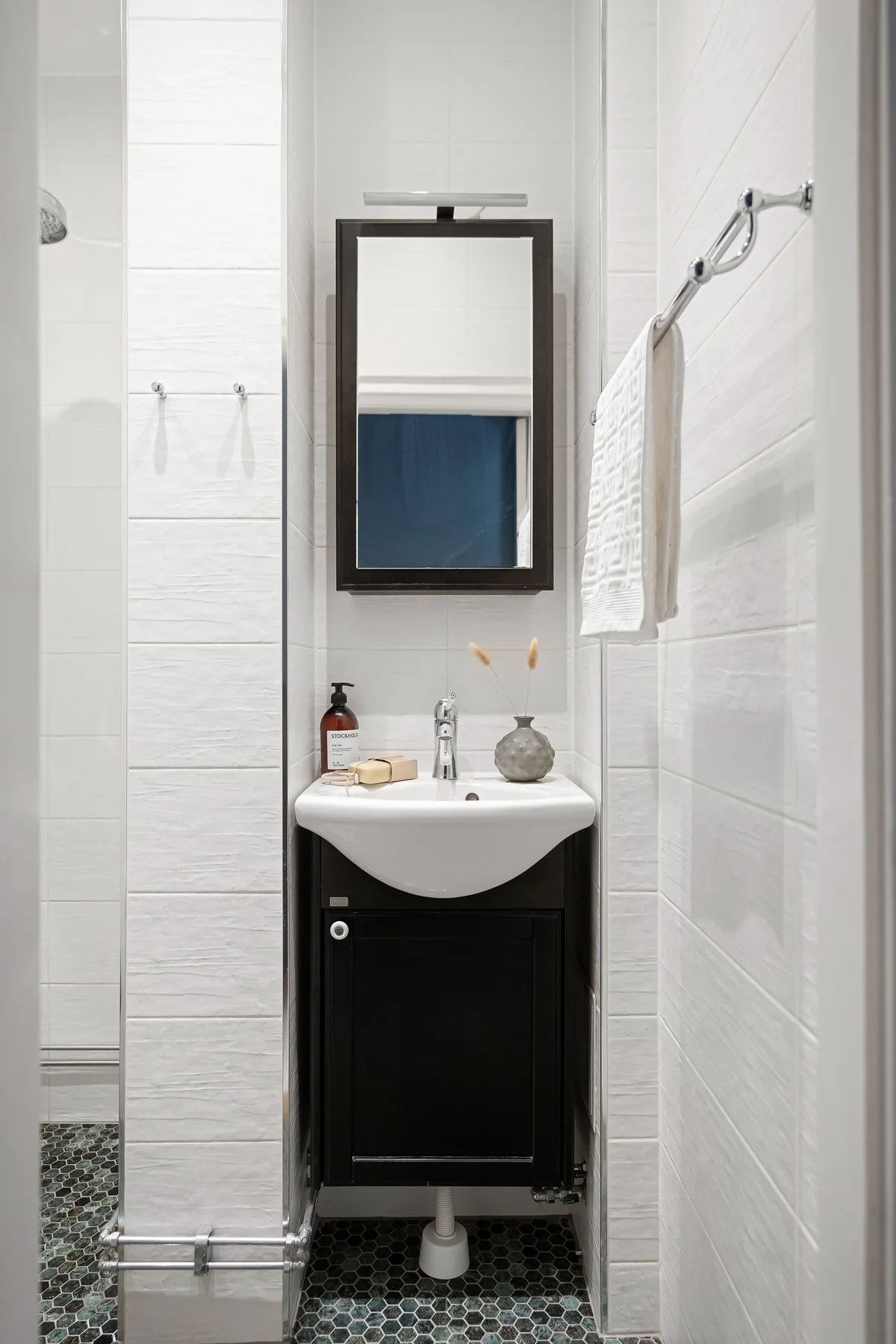
4. Improve the light before replacing the vanity
Harsh overhead light can make a bathroom look flatter and less welcoming than it really is. Conversely, a dim yellow bulb can make the sink area frustrating for shaving, makeup, and everyday grooming.
Start with the least disruptive improvement: clean the fixture cover and mirror, confirm the fixture works correctly, and check whether a different compatible bulb gives a more comfortable result. Choose a light output and color appearance suited to the activities in the room. A frosted bulb or diffuser can soften glare, but it should still provide enough usable light at the mirror.
For a homeowner planning a larger update, lighting from both sides of a mirror may reduce some facial shadows compared with a single light directly overhead. That is a layout option, not a requirement for every room.
Safety first: Follow the fixture's bulb and wattage specifications. Bathroom electrical work, new fixtures, and outlet changes should be handled by a qualified electrician where appropriate. Keep portable plug-in lamps and electrical accessories out of splash zones and use required GFCI protection. Saving money is not a reason to improvise around water and electricity.
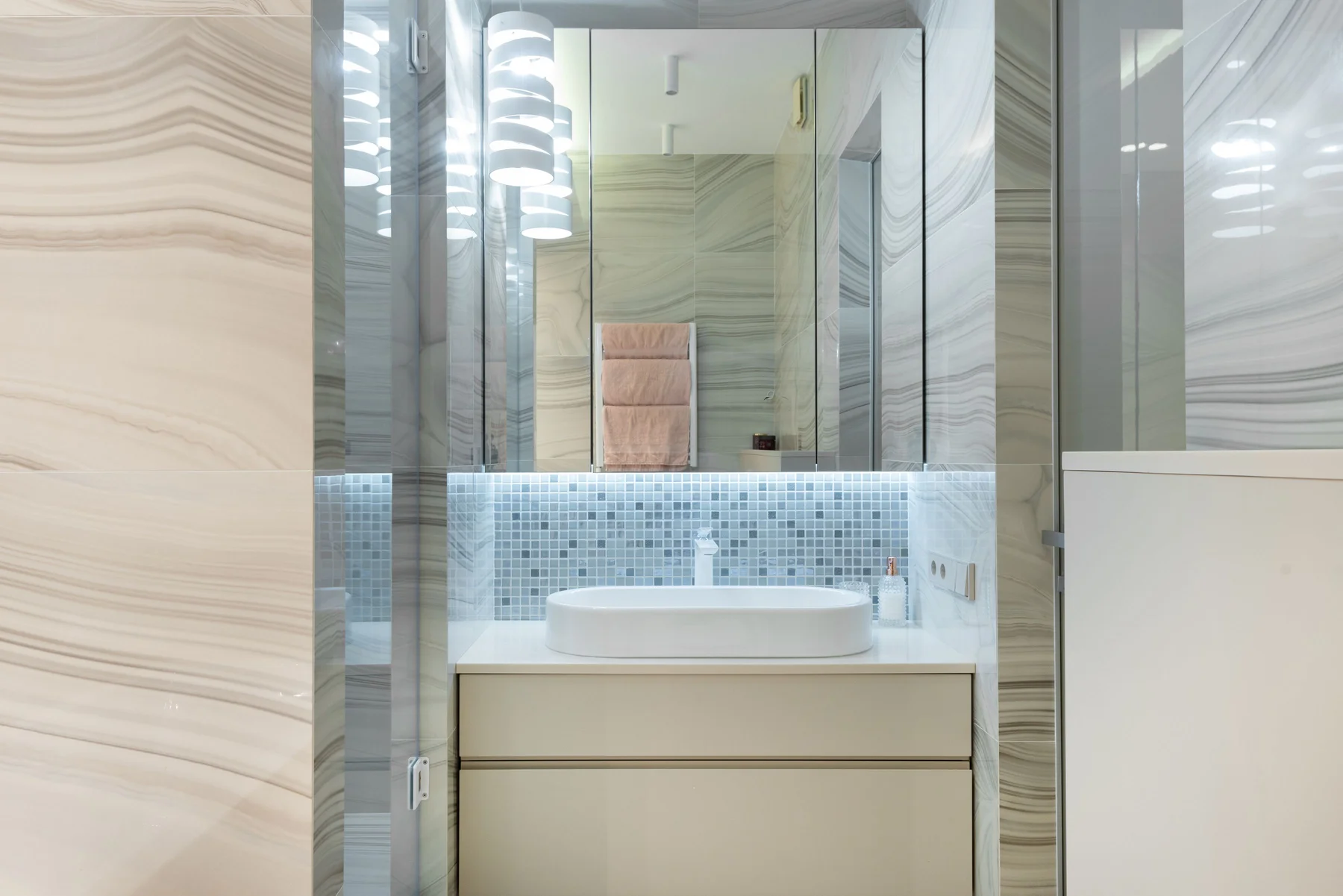
5. Swap dated cabinet handles, not the whole cabinet
If your vanity doors and drawers work properly, changing the hardware can update their appearance while keeping the most expensive component in place.
A slender matte-black pull can sharpen the look of light cabinets; an understated brushed-metal knob can complement traditional wood. Choose a finish that relates to something already in the room, such as the faucet, mirror frame, or towel ring. You do not need every metal finish to match exactly, but three competing finishes in a tiny room can feel accidental.
For a simple swap, measure the center-to-center distance between existing screw holes on pulls. Match that measurement so the replacement doesn't require drilling. Check that the screws fit the thickness of the drawer or door, and avoid hardware with sharp protrusions in narrow passageways.
If the cabinets are water-damaged, loose, or swollen, hardware won't solve the underlying problem. Make sure the doors close properly and surfaces are sound before treating them as a cosmetic project.
Worth doing first: Unscrew one existing pull, record its measurements, and test a sample replacement before ordering an entire set.
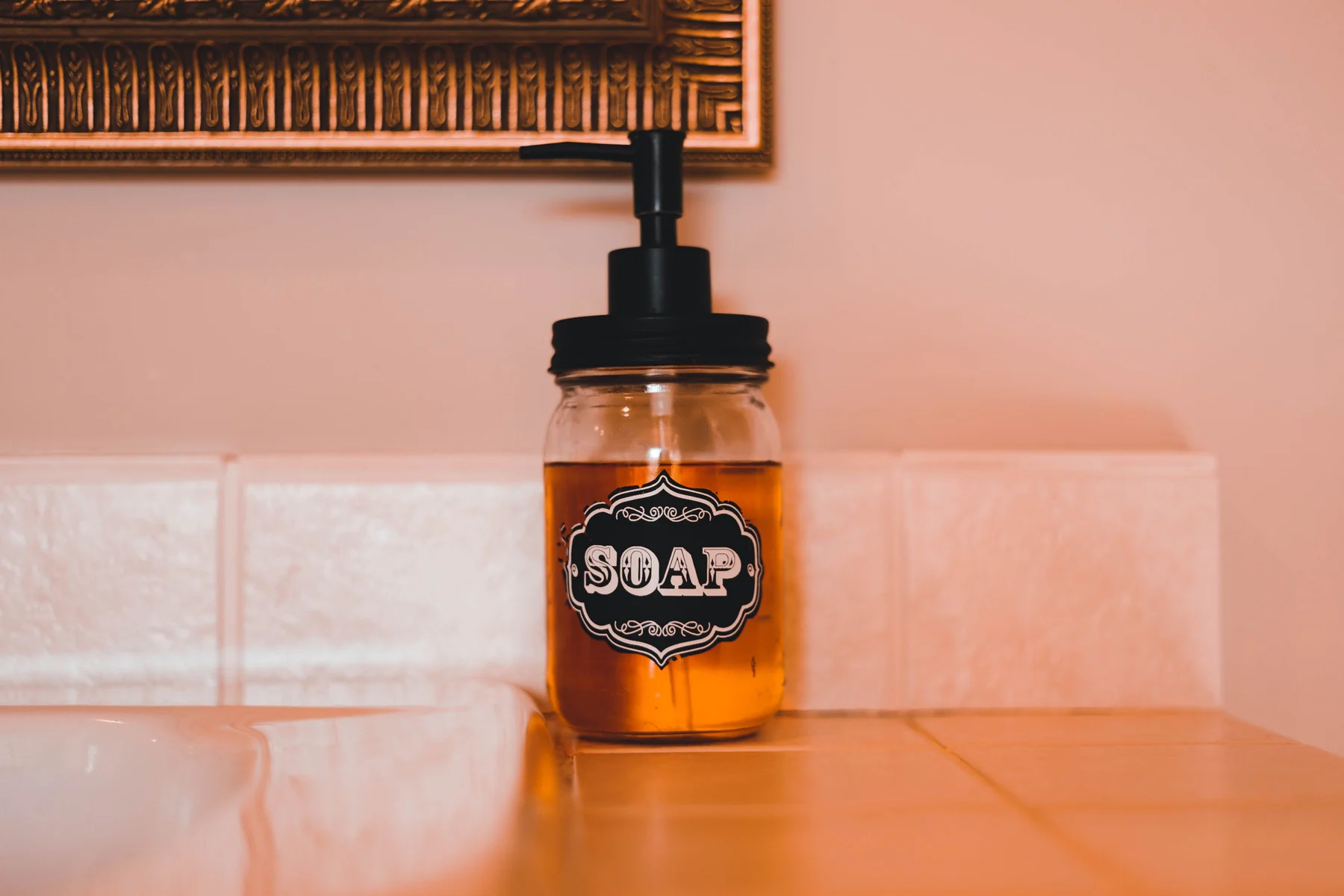
6. Style the sink with one practical tray and fewer bottles
A small countertop feels crowded quickly because toiletries, dispensers, toothbrushes, and cleaning products all compete for the same few inches. The solution isn't necessarily more containers. It may be fewer objects on display.
Keep the products you reach for daily near the sink and move extras to appropriate closed storage. A compact washable tray can make a dispenser and a small dish look like one intentional group. Choose materials that tolerate occasional splashes and are easy to lift so you can clean underneath them.
For example, a simple ceramic soap dispenser, a shallow tray, and a little greenery can add texture to an otherwise basic vanity. But if your sink is barely wider than the basin, skip the tray and keep only the essentials. Don't place glass decor where it can be easily knocked into the sink or onto the floor.
Avoid decanting cleaning chemicals into unmarked decorative bottles. Keep cleaning products in their properly labeled containers and away from children and pets.
Best for: Small bathrooms where the surface looks busy even after you've finished cleaning.
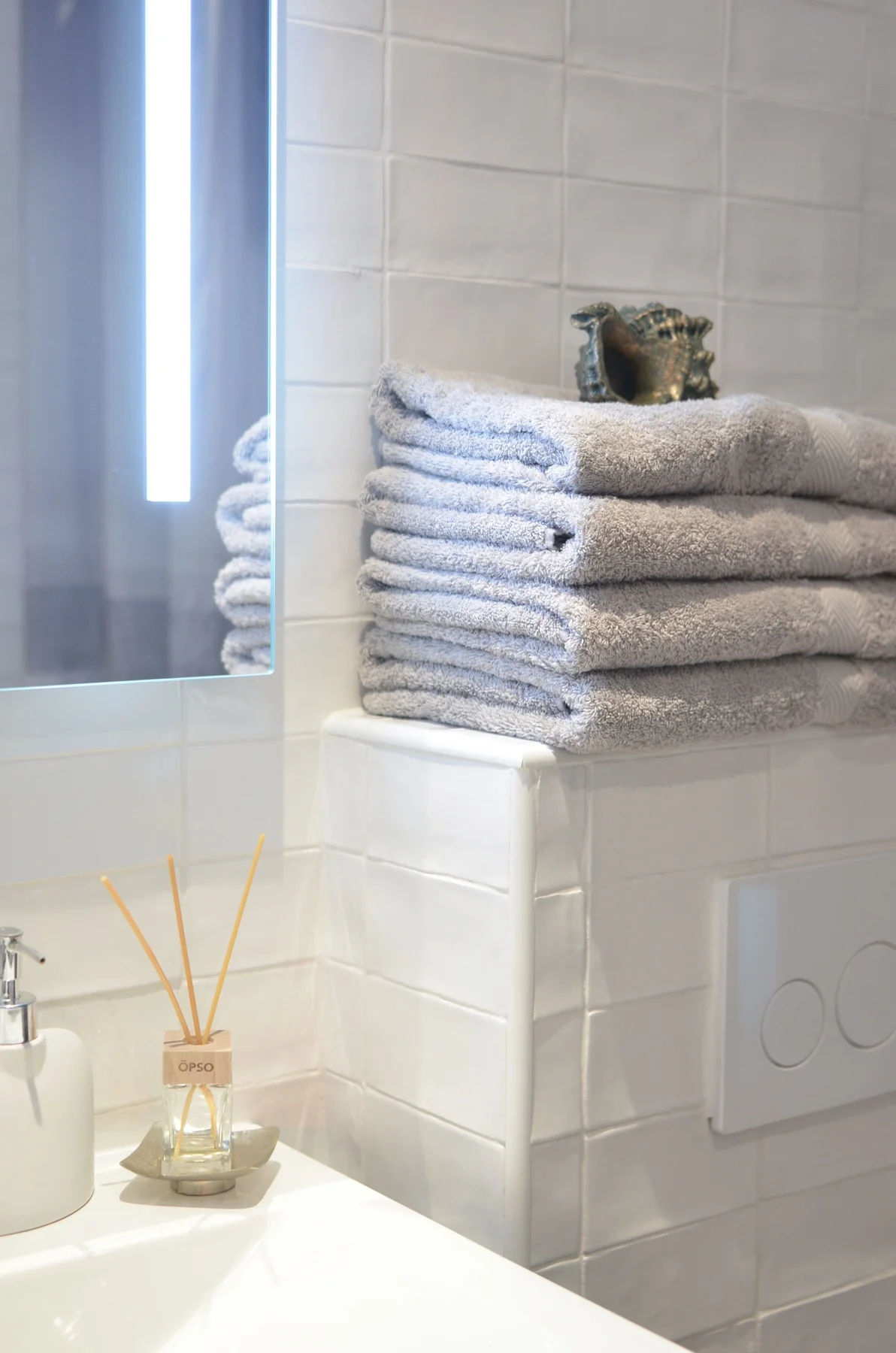
7. Replace worn textiles with a simple coordinated set
Towels, a shower curtain, and a bath mat account for much of the softness in a bathroom. They're also among the easiest things to replace without altering the room itself.
Choose two colors, or one color with variation in texture. Cream towels and a muted blue mat can look fresh next to white tile. Deep green towels can add contrast to a pale bathroom. You can also use a striped hand towel as the only pattern in an otherwise quiet space.
Texture matters as much as color. Ribbed or waffle-style towels look different from plush terry, and a low-profile, washable bath mat can feel tidier than a thick rug that never fully dries. Don't buy a large stack just for display. Keep the number of towels suited to how often you do laundry and the space available for them to dry.
Practical detail: A bathroom mat should be appropriate for wet floors and remain stable underfoot. Follow its care instructions and keep towels hung so air can circulate. If fabrics stay damp, the room may need better ventilation rather than more decorative textiles.
8. Add one piece of wall art away from direct water
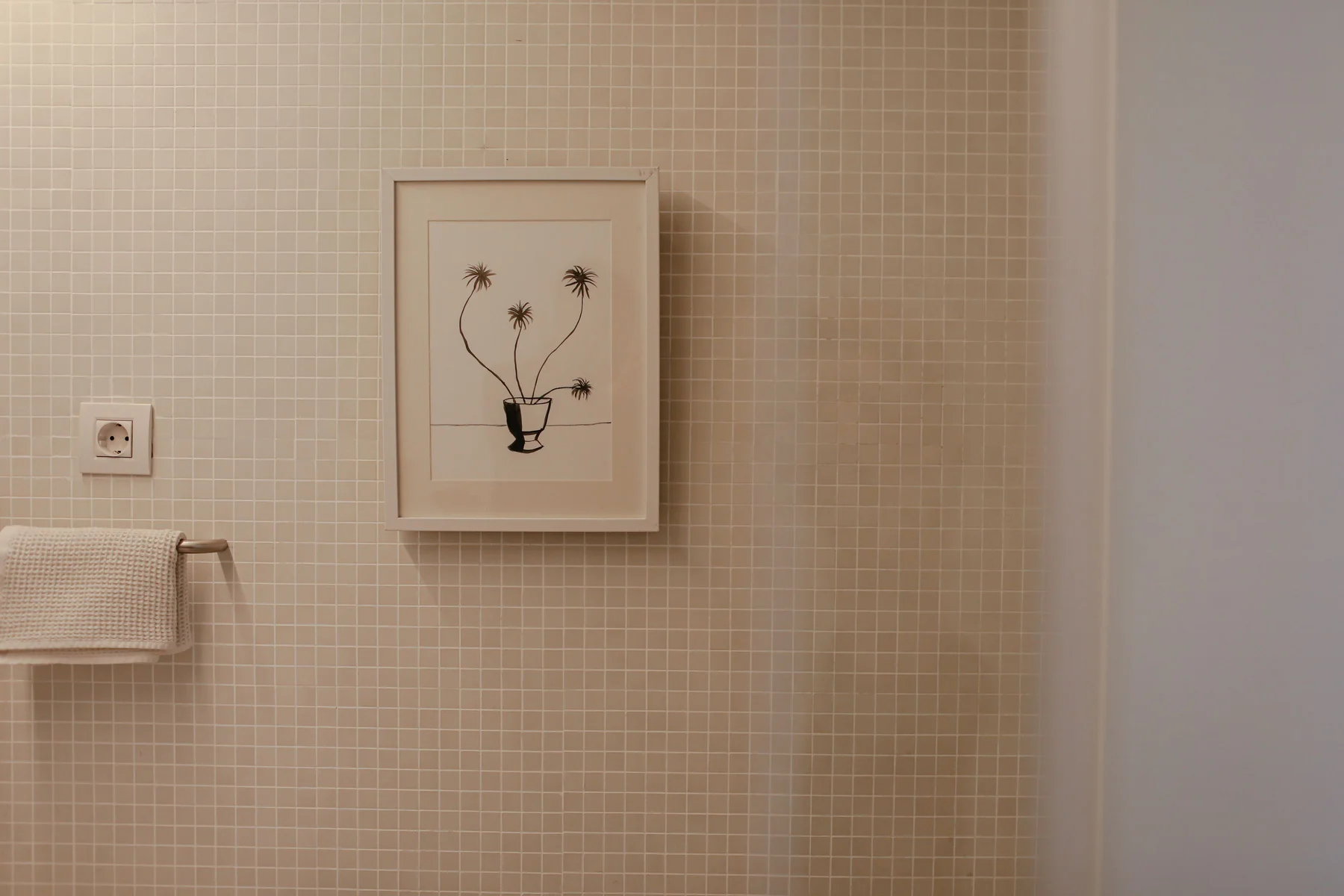
Art can give a small bathroom the personality it lacks, especially if the fixtures and walls are plain. You don't need a gallery wall. One considered print above a towel rail or beside the doorway may be enough.
Botanical studies, small landscapes, vintage-style illustrations, and abstract shapes can all work. Let the artwork relate to something you already see in the room: a green tile, a warm wood vanity, or a patterned curtain. The goal is to make the colors feel connected, not to match everything precisely.
Bathrooms expose objects to humidity and occasional splashes, so placement and materials matter. Keep framed pieces away from direct spray and condensation-prone areas. Choose suitable, replaceable prints and moisture-tolerant framing where appropriate. Expensive originals, delicate paper, and treasured family photographs may be better displayed elsewhere.
Renter option: A lightweight piece on an approved removable hanging system may work on a dry, smooth wall, but follow the product's surface, weight, and humidity instructions. Don't assume a removable hook will work on grout, wallpaper, or textured paint.
9. Refresh the look of tile and grout through careful maintenance
Tile can make an otherwise nice bathroom look tired when the surface has soap residue, the grout is discolored, or the caulk is failing. Before spending on decorative coverings, find out whether a careful clean or a targeted maintenance repair will help.
Start with a cleaning product appropriate for the tile, grout, and surrounding fixtures. Test in an inconspicuous place. Some finishes and natural stones can be damaged by acidic or abrasive products, so follow material-specific instructions rather than choosing the strongest cleaner on the shelf.
If caulk has separated or grout is crumbling, that calls for repair, not a decorative paint pen. Identify and address leaks or persistent water penetration before sealing anything. A grout colorant may be an option on sound, compatible grout, but it won't repair loose tile or moisture damage.
Cleaning safety: Never mix bleach with another household cleaner. Follow labels, use adequate ventilation, and keep cleaning chemicals away from children and pets.
A clean, repaired surface may be all the refresh a small shower needs. It can also reveal whether the room's real problem is maintenance, not decorating.
10. Treat peel-and-stick products as a carefully chosen accent
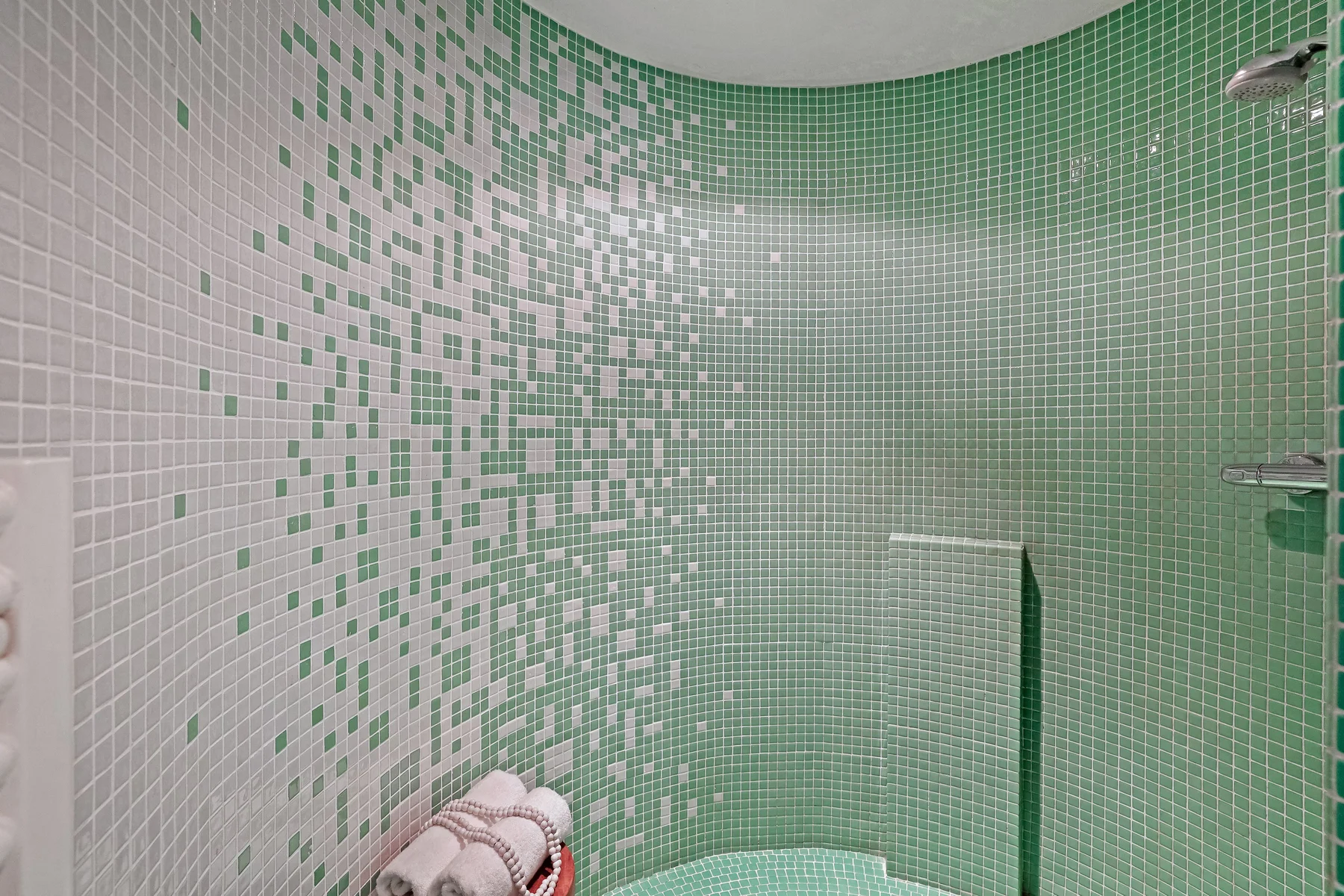
Removable wallpaper and adhesive accents are tempting because they promise a quick change without demolition. They can be useful in the right situation, but bathrooms are not always forgiving environments for adhesives.
Moisture, temperature changes, textured walls, old paint, and direct spray can reduce adhesion or complicate removal. A product advertised as renter-friendly may still leave residue or lift paint. Before buying, read the manufacturer's instructions for humidity, surface preparation, curing time, and removal, then test a small inconspicuous area if the product allows.
If you have a dry powder room, a removable accent on a suitable wall may be more realistic than trying to cover the wall inside a shower. In a steamy bathroom with poor ventilation, textiles and framed art are often simpler changes.
11. Make the existing finishes feel deliberate with a simple color plan
A bathroom sometimes feels mismatched not because the finishes are unattractive but because every purchase introduces a new color or texture. A small palette can help existing pieces seem more considered.
Start with the three things you aren't changing: tile, vanity, and floor. Those are the foundation. Then pick one dominant textile color and one smaller accent. A bathroom with gray tile, for instance, might feel warmer with oatmeal towels and a walnut-toned frame. A bathroom with cream tile and a wood cabinet might work with olive towels and dark metal accents.
Try repeating a color no more than two or three times: perhaps in the shower curtain, hand towel, and small artwork. Leave plenty of plain space. If every surface becomes an accent, the room loses the calm you were trying to create.
12. Plan a realistic weekend refresh instead of buying everything at once
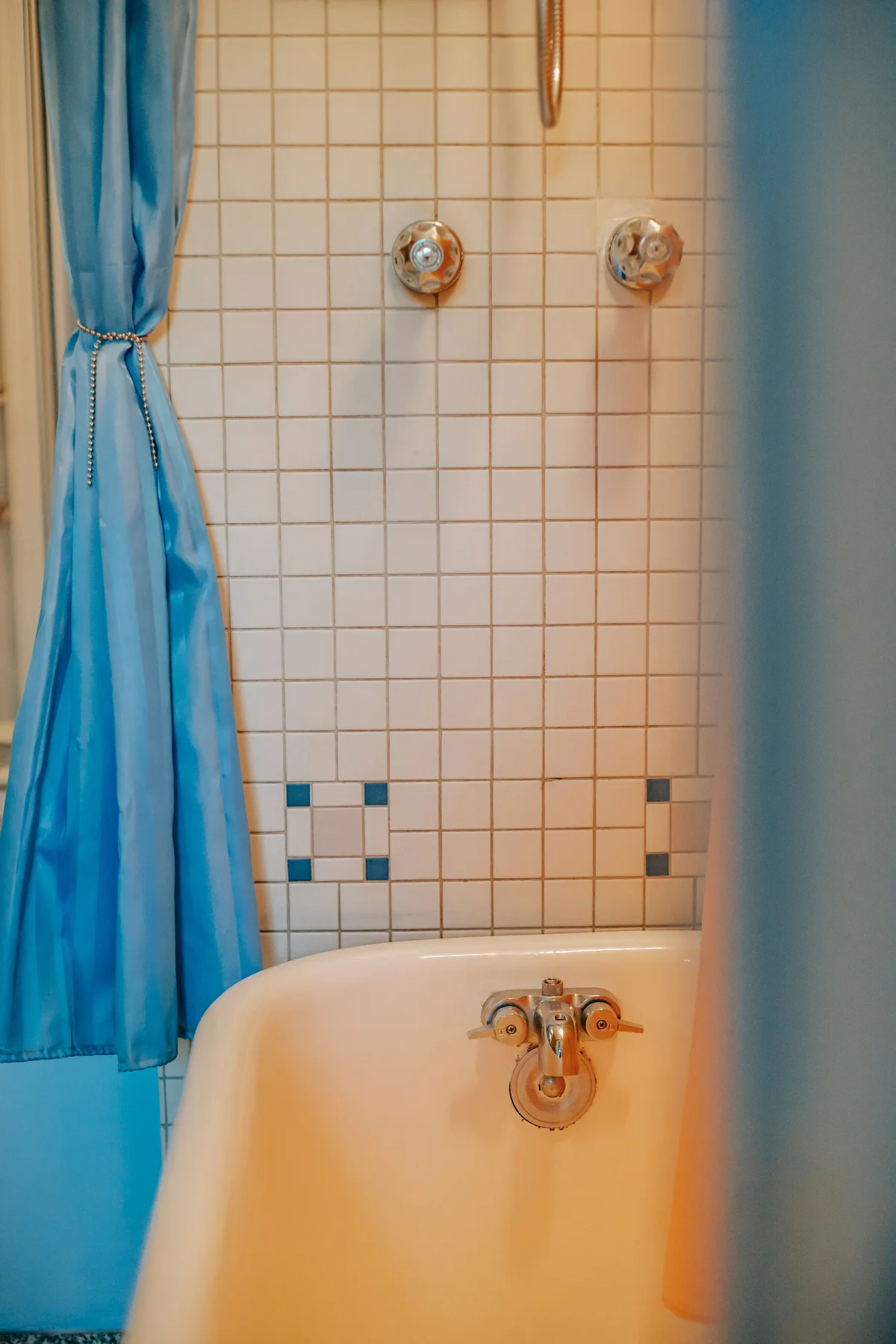
The strongest budget bathroom makeover is usually a sequence, not a shopping haul. Changing one large, tired item and fixing a few supporting details allows the room to feel better while keeping costs controlled.
Try this order:
- Friday evening: Remove items you don't use, inspect for water problems, and measure the curtain, mirror area, and vanity hardware.
- Saturday morning: Clean suitable surfaces carefully, wash textiles, and make sure the fan and lighting work as expected.
- Saturday afternoon: Install low-risk, approved cosmetic items such as a curtain, towel, tray, or framed print. Leave painting and electrical work to the appropriate time and conditions.
- Sunday: Put back only the essentials, adjust the placement, and see which problem is still visible. If the room already feels complete, stop shopping.
A bathroom that looks more intentional and works better is a successful refresh. You don't have to replace the sink, swap the tile, or turn every shelf into a display.
Three sample refresh plans
For a rental: Wash the surfaces, choose a new curtain and two coordinating towels, and add a small tray only if the sink has room. Keep changes reversible and confirm any hanging method is permitted.
For an older bathroom with good fixtures: Focus on maintenance first, then evaluate a compatible mirror shape or new cabinet pulls. Retaining sound materials can keep your budget available for repairs that really matter.
For a very small powder room: Use one piece of artwork, a pleasant hand towel, and a clear sink surface. With no tub or shower, a carefully chosen wall accent might work where it would be unsuitable in a wet bathroom.
Mistakes that make a budget bathroom refresh more expensive
- Buying matching sets without measuring: A mat that's too wide or a tray that blocks the faucet is clutter, not an upgrade.
- Choosing appearance over moisture performance: Damp textiles, failing adhesive and poorly ventilated paint projects can create work later.
- Ignoring loose or leaking fixtures: Decorative changes should never hide a maintenance issue.
- Adding too many small objects: Small rooms usually benefit from an edited arrangement instead of more surfaces to dust.
- Installing heavy objects without proper mounting: A mirror or shelf must be secured for the wall and its weight, not just for how it looks.
- Assuming every DIY project is renter-friendly: Get the required permission and check the actual removal requirements.
Frequently asked questions
What is the cheapest way to make a small bathroom look better?
Start with the things you already own. Remove unused products from the sink, clean appropriate surfaces, wash the bath mat and curtain, and edit the visible accessories. If you still want one purchase, a shower curtain or hand towel that ties the room's colors together can make a more obvious difference than several small ornaments.
How do I make a small bathroom look expensive without remodeling it?
Focus on proportion, cleanliness, and restraint. Choose a shower curtain that fits properly, keep a simple color palette, use lighting that's comfortable and functional, and display only useful countertop items. A room with well-maintained existing fixtures usually feels more finished than one filled with decorative purchases.
Can I use peel-and-stick wallpaper in a bathroom?
Only where the specific product and wall conditions are suitable. Check the manufacturer's guidance about humidity, wall preparation, adhesion, and removal. Avoid direct water exposure and do not use decorative wallpaper or tile stickers to cover leaks or damaged materials. In a rental, ask permission when required.
What colors work in a small bathroom?
There is no single correct palette. Warm whites, softened blues, olive, terracotta, charcoal accents, and deeper colors can all work, depending on the daylight and existing tile. Compare samples in the actual room and choose colors that relate to the fixtures you're keeping rather than assuming the lightest color will always be best.
Is changing a mirror or light fixture a beginner DIY project?
Swapping a small accessory is quite different from mounting a heavy mirror or changing electrical wiring. Mirrors need secure mounting appropriate to the wall and weight. Hardwired bathroom lighting should be installed in accordance with local requirements, typically by a qualified electrician. For a lower-risk change, consider compatible bulbs or better textile styling first.
How do I refresh a bathroom when I'm renting?
Concentrate on removable textiles, freestanding accessories, a decluttered counter, and approved hanging solutions. Check your lease before painting, drilling, changing hardware, or applying adhesive products. Keep the original fixtures and hardware when you are permitted to swap them so they can be restored later.
A small bathroom can feel finished without a major project
You don't need twelve new purchases to benefit from these twelve ideas. Pick the change that addresses your biggest frustration, then add one detail that helps the room feel cohesive. A practical bathroom with dry surfaces, usable storage, working lights, and a little personal style will be more satisfying than a perfectly staged room that's hard to use.
If the main problem is finding places for everyday essentials rather than updating the style, start with our bathroom storage ideas. For decor choices that carry through the rest of a compact home, see our small apartment decor ideas.
Sources
- U.S. Environmental Protection Agency: What are ten things I need to know about mold?
- U.S. Environmental Protection Agency: Remodeling Your Home and Indoor Air Quality
- Electrical Safety Foundation International: How to Use GFCIs
- Centers for Disease Control and Prevention: Cleaning and Disinfecting with Bleach
Editorial note: The photographs used with this article illustrate decorating ideas. They are not presented as before-and-after transformations, documented renovations, or products personally tested by NorahDecor.