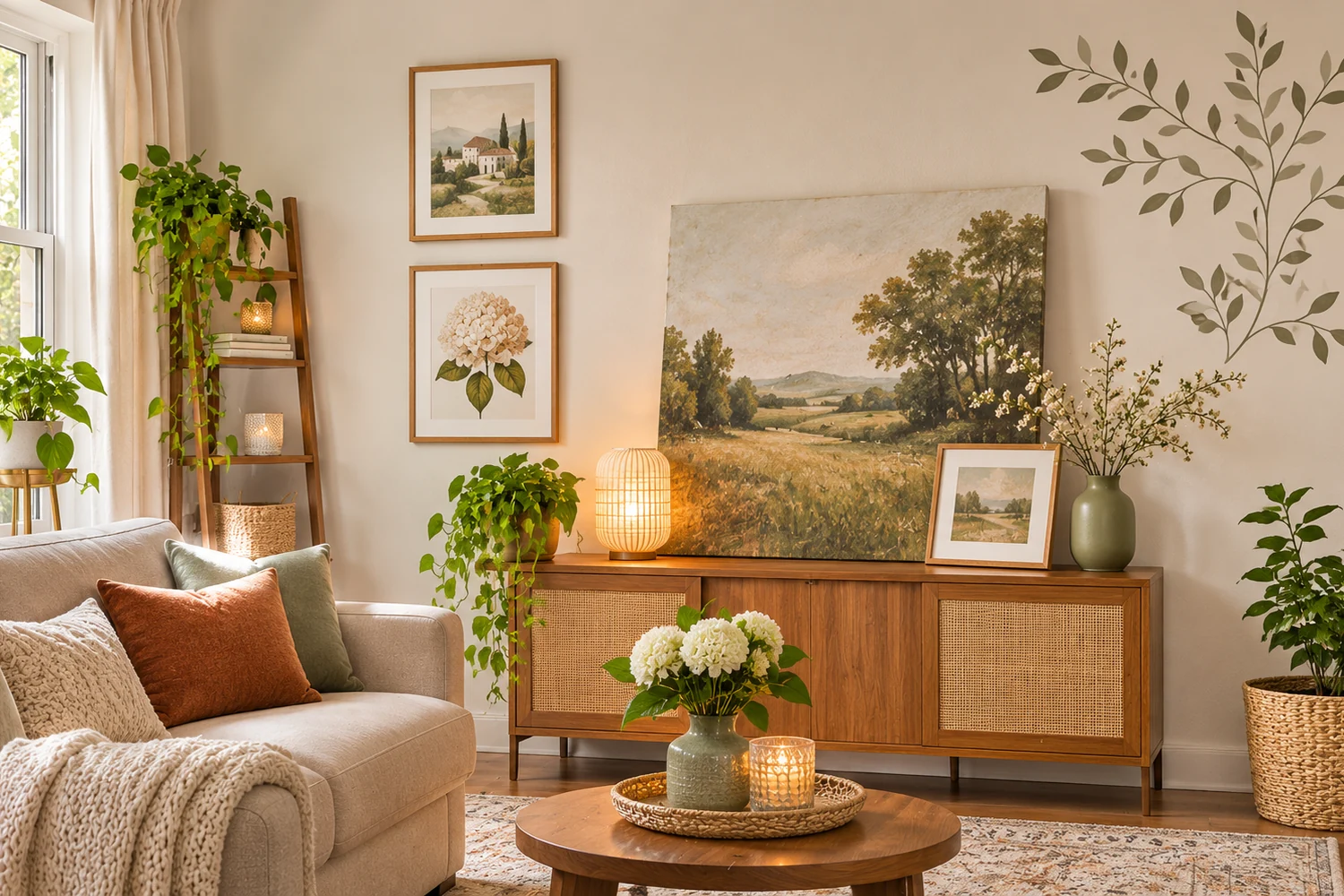
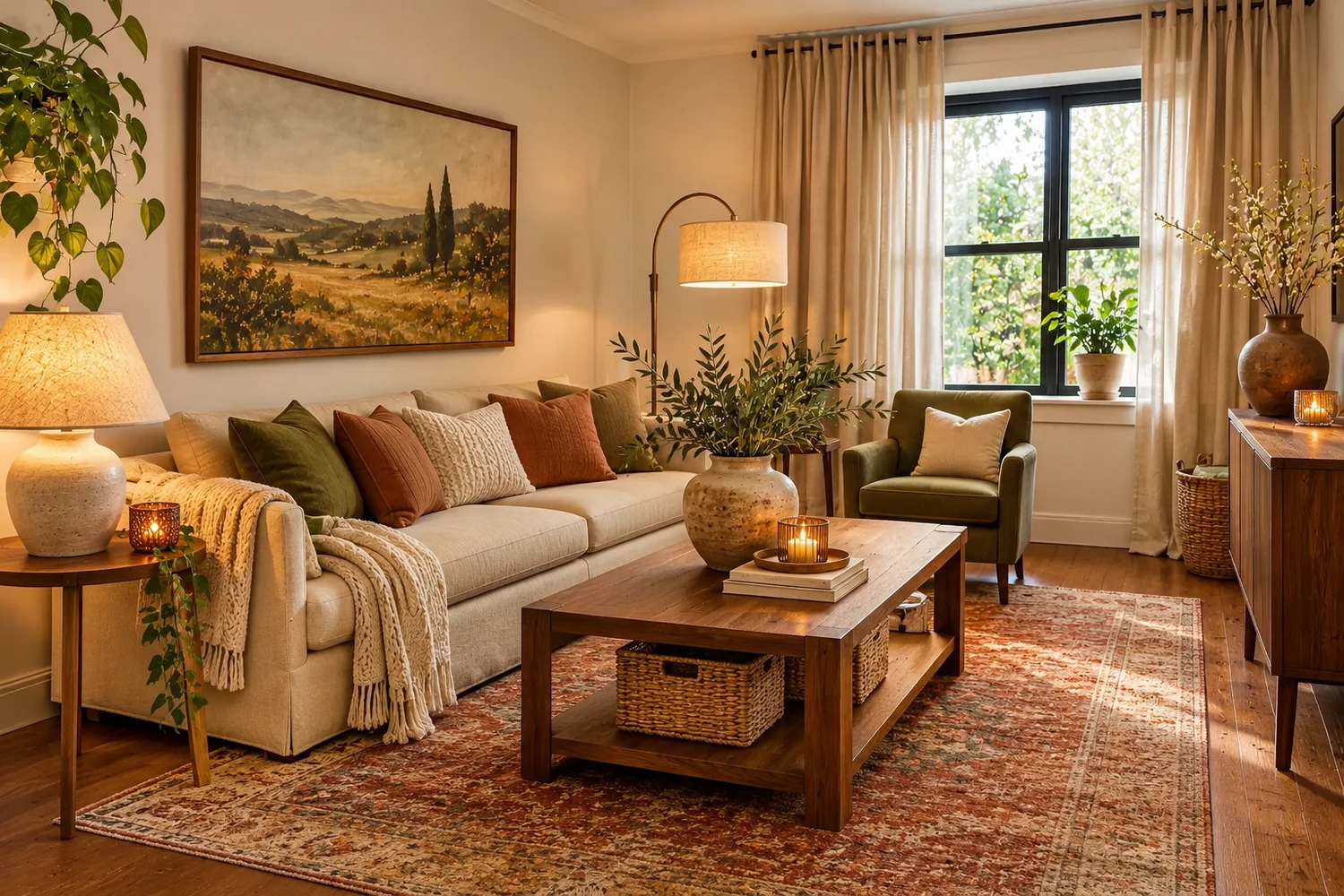
Wall Decor
Dining Room Wall Decor Ideas to Finish a Blank Wall
Make a dining room wall feel finished with 12 practical ideas, from oversized art and mirrors to textiles and picture lights, plus placement and sizing tips.
- Published
- November 26, 2026
- Reading time
- 21 minutes
- By
- NorahDecor Editorial
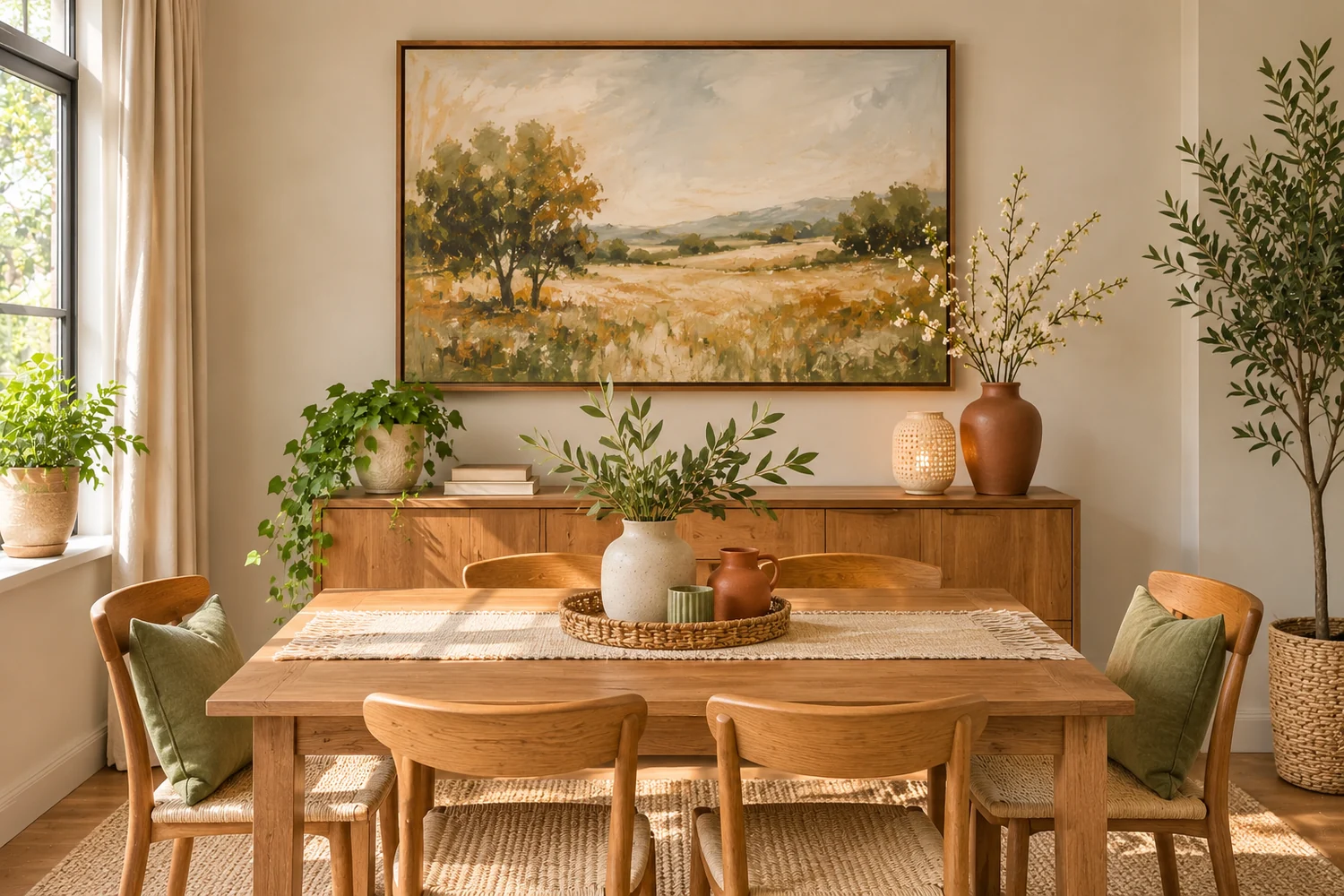
A blank wall can make an otherwise comfortable dining area feel unfinished. But filling every empty stretch with frames isn't the answer. In a dining room, the wall has to work with a table, moving chairs, overhead lighting, a sideboard, and people who look at it from both seated and standing positions.
The most convincing dining room wall decor usually does one clear job: it anchors the table, gives a serving cabinet some visual weight, reflects daylight, or introduces a color and texture that the furniture lacks. It doesn't have to be expensive or complicated. A single print placed thoughtfully can do more than six pieces selected simply to fill space.
These 12 ideas range from familiar framed art to mirrors, textiles, and lighting. Each one explains where it works best, how to approach the scale, and what to check before installing it. There's also a wall-measuring method, diagrams for common arrangements, and advice for small rooms and rented apartments.
First, decide which wall deserves attention
Before choosing artwork, stand in the doorway and look at the room. The best focal wall isn't always the widest wall. It is the surface that can hold a deliberate composition without competing with a window, light fixture, or piece of furniture.
Ask these questions:
- What do you see first? A wall opposite the entrance often benefits from a clear focal piece; a wall beside the doorway may be better left quiet.
- Is there a sideboard or bench? Artwork often reads as a group with the furniture below it. This can make an awkwardly empty stretch feel intentional.
- What happens when everyone sits down? Check how the wall looks above heads and chairs, whether a mirror reflects a bare bulb, and whether objects project into a place where someone might stand up or walk past.
- What is already visually busy? An open kitchen, patterned rug, pendant light, or striking wallpaper may mean the dining wall only needs one calm element.
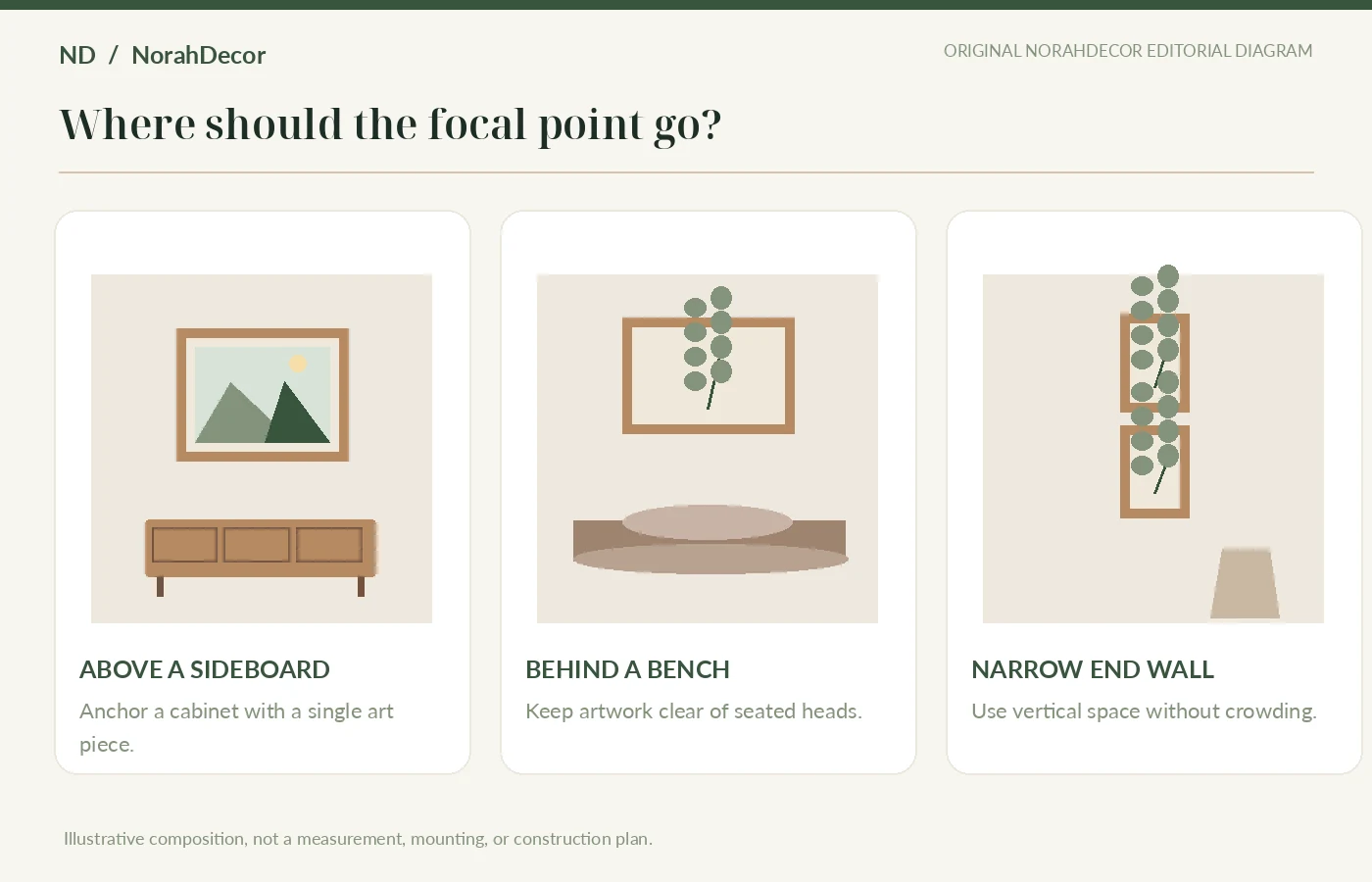
Measure the real composition, not just the wall
Write down the wall's usable width and height. Then measure the table or sideboard underneath it, including its actual placement. Mark the location of outlets, thermostats, vents, switches, windows, and any door that opens against the wall.
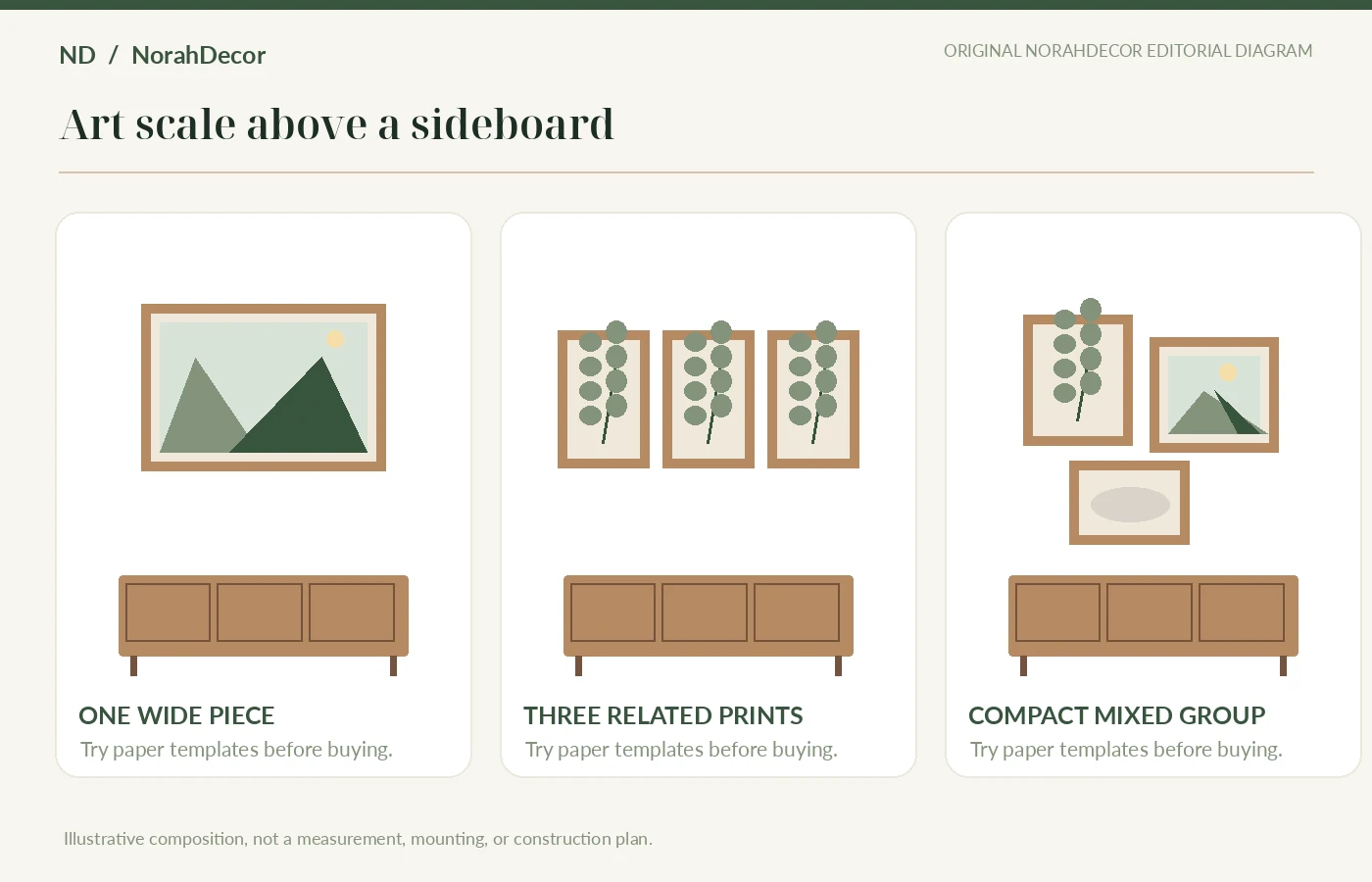
For a sideboard arrangement, measure the furniture's visible width and temporarily tape paper the size of the proposed art above it. Look at the arrangement while seated at the table and from the doorway. A useful starting point is to make the artwork noticeably narrower than the furniture, but there's no universal percentage that works with every frame, wall, or cabinet.
For a wall behind dining chairs, pull every chair back as though someone were getting up. Then check the distance to the wall and any protruding shelf or sculpture. A piece that looks beautiful in a staged photograph may be uncomfortable in everyday use.
The goal: Keep the wall decor visually connected to the dining area while preserving safe circulation, access, and comfortable seating. Our small dining room ideas guide goes further into table placement and occupied-chair clearance.
12 dining room wall decor ideas
1. Give a sideboard one oversized piece of art
If your dining room has a buffet or sideboard, begin there. One substantial framed print, canvas, or original artwork above the cabinet can make the room look finished without asking the wall to hold multiple objects.
A landscape works especially well when the sideboard is long and low. Its horizontal shape echoes the furniture, while a little breathing room around the frame keeps the composition relaxed. An abstract painting can do the same job in a contemporary room. A botanical illustration, still life, or vintage-style print offers a softer effect.
Try this: Measure the full frame, not only the printed image. Make a paper rectangle of the same size, tape it to the wall, and look at it with the tabletop centerpiece in place. If the painting feels detached from the sideboard, adjust the relationship before drilling or buying another frame.
Watch out for: Hanging the piece so high that it feels like it belongs to the ceiling rather than the furniture below. Also check whether a tall vase or lamp on the cabinet blocks its lower edge.
2. Create a low, compact gallery above the dining table
A gallery wall can work in a dining room, but it needs a different rhythm from the one over a living-room sofa. People sit closer to it, chairs move, and the wall may be only partly visible from the doorway.
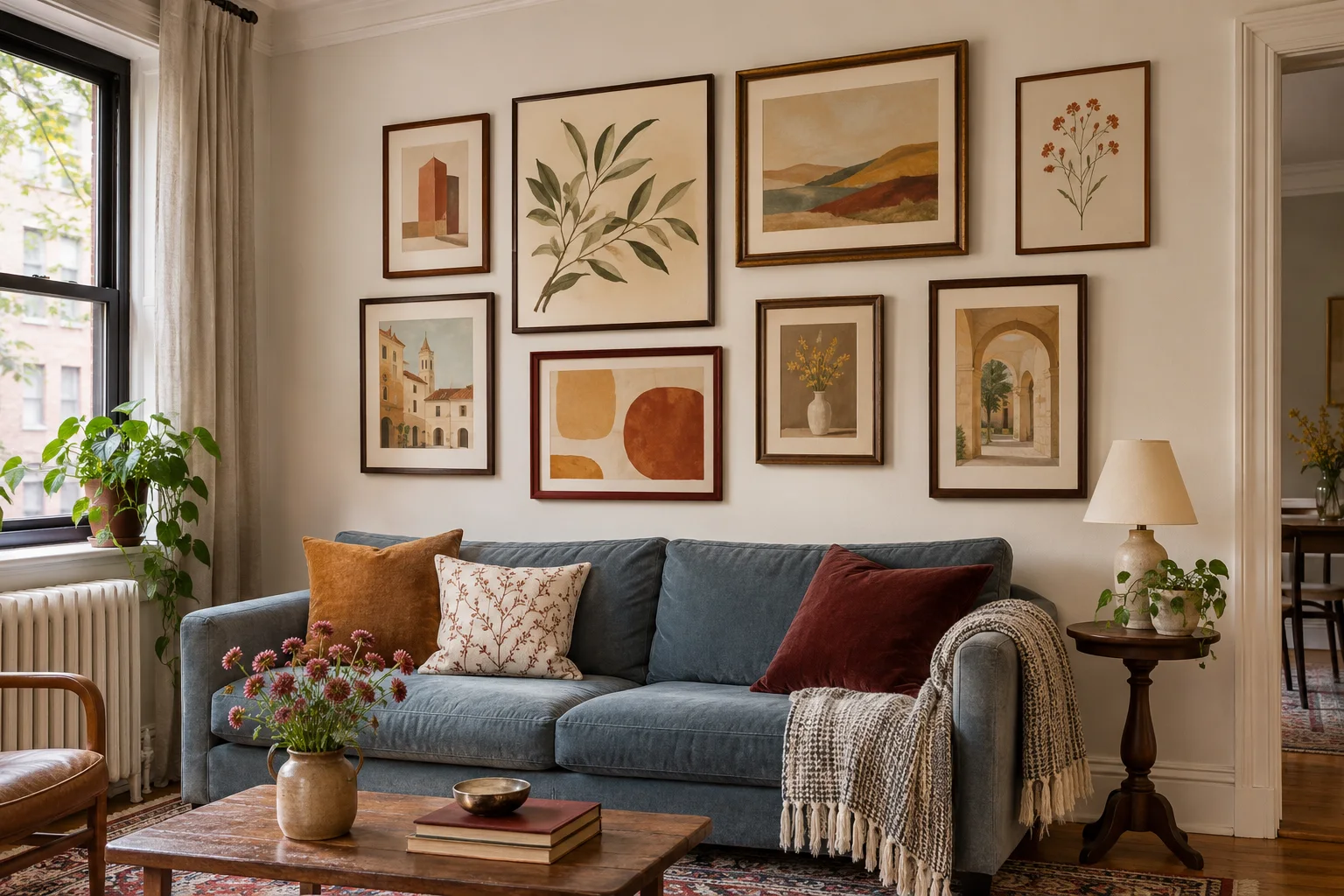
Start with three to five related pieces rather than filling the entire wall immediately. Build one coherent outline, such as a wide rectangle or an intentionally loose horizontal band. A shared mat color or frame finish can make photographs, line drawings, and paintings feel connected even when the subjects differ.
If the table runs parallel to the wall, test the grouping from the far end of the table. If it feels crowded, remove one frame before reducing every gap. An arrangement with a clear outer shape is easier to read than a collection that spreads in all directions.
Best for: A dining table pushed near a long wall or bench seating where the room needs character but not extra furniture.
Watch out for: Spreading frames far beyond the dining zone, especially into a hallway or door opening. For a step-by-step hanging plan, see our separate gallery wall layout guide.
3. Use a botanical triptych to echo a long table
Three related prints in a row offer an orderly alternative to a mixed gallery. Botanical studies, coastal sketches, architectural line drawings, and abstract shapes all work, provided the set belongs together visually.
The advantage of a triptych is control. You can choose three frames of similar dimensions, place them at consistent intervals, and balance them against the length of the table or sideboard. This is particularly useful when there isn't room for a large statement canvas or when the room already has an expressive pendant light.
Try this: Lay the three framed pieces on the floor in their proposed order. Swap the center and side prints, then photograph both versions. A darker or more detailed center piece may create a better focal point than three identical-looking compositions.
Watch out for: Treating the spaces between frames as universal measurements. Frame size, subject matter, and wall width change the spacing that looks balanced.
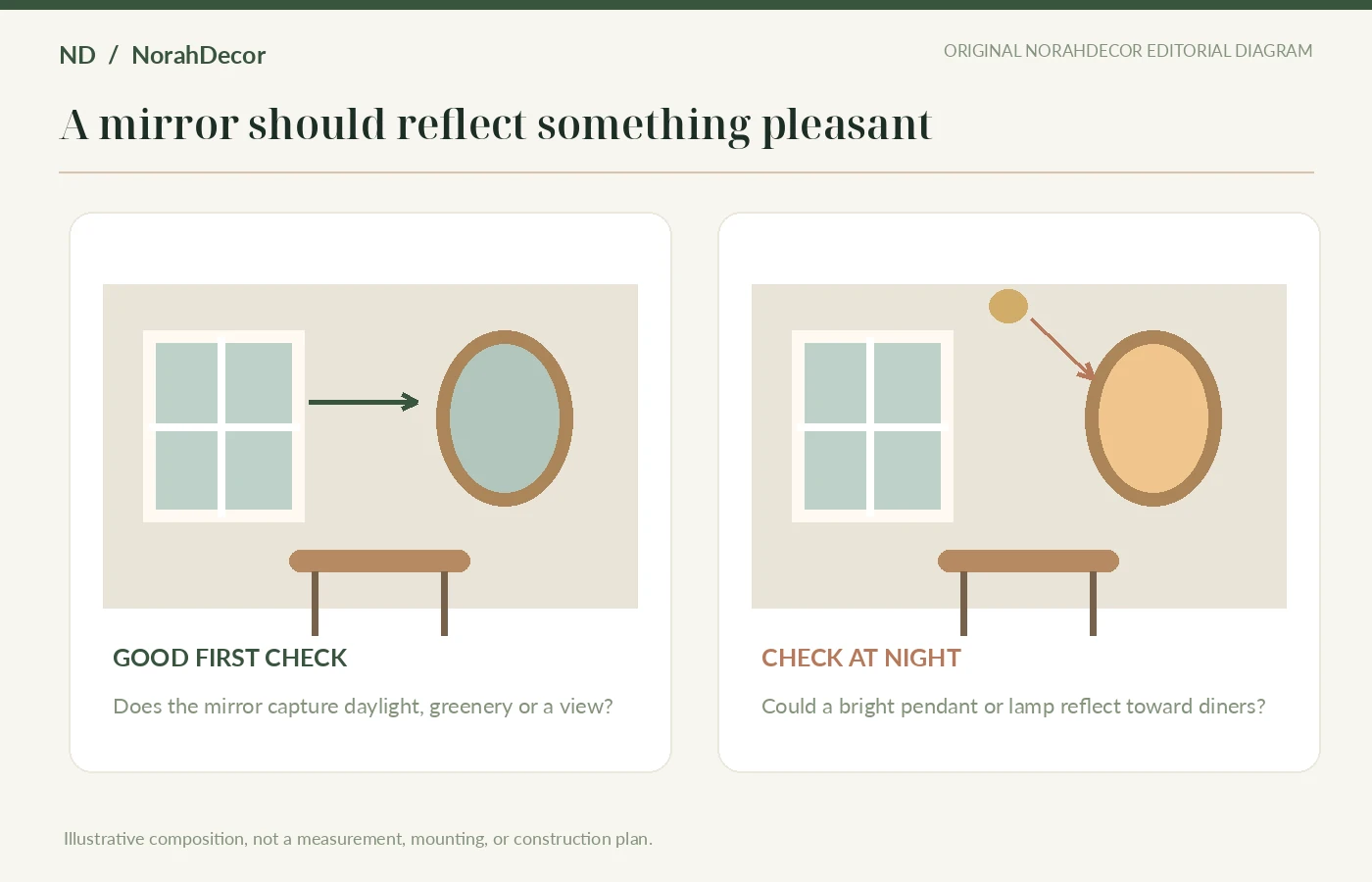
4. Add a mirror where it can reflect daylight, not glare
A mirror can make a dark dining corner feel more open, particularly when it catches a window, greenery, or a pleasant view. In a narrow room, a tall oval or softly arched mirror may add height without demanding a lot of wall width. Above a substantial sideboard, a wide mirror can create a stronger relationship with the furniture.
But a mirror is not automatically the best choice. Put a temporary paper template where you plan to hang it, then assess the reflection at breakfast and after dark. A mirror opposite an exposed bulb or a bright pendant can reflect glare directly toward diners. It may also reflect a cluttered kitchen counter rather than the window you expected.
Best for: A dim side wall, a dining nook opposite a window, or a small room that needs a light-reflecting surface.
Watch out for: Heavy mirrors installed with unknown adhesive products or unsuitable wall hardware. Use a mounting system designed for the mirror's complete weight and the actual wall construction. Where tipping or impact is possible, prioritize secure mounting over a purely decorative solution.
5. Arrange decorative plates as a restrained wall collection
Decorative plates can introduce color and pattern without introducing another large painting. They work in classic dining rooms, cottage spaces, and eclectic interiors, but the arrangement doesn't need to look like a crowded antique shop.
Choose a small group with a shared idea: all blue-and-white, all natural glazes, or two complementary patterns. Start with a central plate and build outward. Try laying the arrangement on a table first, photographing it from above, and tracing the outlines on paper before marking the wall.
Best for: A shorter wall beside a china cabinet or a dining nook with relatively simple furnishings.
Watch out for: Decorative plates are often ceramic and breakable. Use secure, purpose-designed hardware compatible with each plate's weight and shape. Avoid positioning fragile pieces where chairs, doors, or hands might knock them. Adhesive discs are not universally suitable for all glazes, temperatures, or weights.
6. Stack two tall prints on a narrow end wall
Some dining rooms have a sliver of wall between a door and a window, or a narrow surface at the end of a banquette. A conventional wide picture will look squeezed there, but two vertically stacked prints can turn the proportions into an advantage.
Think of the pair as one tall object. Keep the outer edges aligned, select a consistent mat or frame style, and use subjects that are closely related. Two monochrome architectural drawings or botanical stems may be enough to give the small wall a purpose.
Try this: Stand at the table and check the upper frame's visibility. If the entire pair disappears behind a light fixture or looks too tall from the seated viewpoint, switch to a single portrait artwork.
Best for: A short return wall, end-of-room focal point, or the space beside a built-in dining bench.
Watch out for: Hanging anything where a door handle or chair back could hit it.
7. Introduce texture with a framed textile or woven hanging
Dining rooms can have a surprising number of hard materials: wood, glass, tile, metal, and ceramic. A woven panel, framed fabric fragment, or simple textile artwork adds softness without taking up floor space.
A neutral woven piece feels quiet in a contemporary room. A patterned textile can echo cushions on a banquette or colors in a rug. Framing the textile protects it from handling and gives it a more finished outline; a hanging textile offers a more casual look.
Best for: A dining area with a lot of hard surfaces or one large blank wall where a painting feels too formal.
Watch out for: Fabric close to candles, cooktops, or high-heat fixtures. Check cleaning and dust buildup, particularly if the dining room opens directly into the kitchen. A textile shouldn't be positioned where people brush against it when moving chairs.
8. Put a shallow picture ledge above a serving zone
A picture ledge lets you change smaller art prints, postcards, and seasonal pieces without drilling fresh holes each time. It makes sense above a low serving cabinet where the contents can be curated as one display.
Choose a low-profile ledge rather than a deep shelf. Keep the display restrained: perhaps two layered framed prints, one small object, and a little open space. Match the ledge finish to a wood tone or metal finish already in the dining room so it doesn't introduce a completely new visual language.
Best for: A long, plain wall above a sideboard where you enjoy swapping artwork over time.
Watch out for: Shelves are not interchangeable with picture-hanging strips. Use the ledge manufacturer's compatible fasteners and wall guidance, accounting for the ledge and all objects together. Keep breakables away from edges and don't let a shelf project into a walking route.
9. Use a quiet accent color or pattern instead of hanging anything
Sometimes the most useful wall decor is the wall itself. A muted clay, deep olive, soft blue-gray, or warm earthy paint color behind the table can define the dining area without adding more physical objects.
For a compact dining corner, a simple painted rectangle or a whole accent wall may be calmer than several frames. A subtle wallpaper can add a similar effect in a room with restrained furniture. The goal is to create a background that makes the table and chairs feel grouped, not to compete with them.
Try this: Test large paint swatches at different times of day. A color that appears soft in daylight can look much deeper under warm pendant lighting. If you're renting, check the lease before painting or applying any peel-and-stick product, and test the actual wall finish according to the manufacturer's instructions.
Best for: Small apartment dining corners, rooms with interesting furniture, and walls that don't need another physical fixture.
Watch out for: Assuming all temporary wall coverings will remove without damage. Wallpapered, textured, freshly painted, or weak surfaces can behave very differently.
10. Frame a dining wall with thoughtful lighting
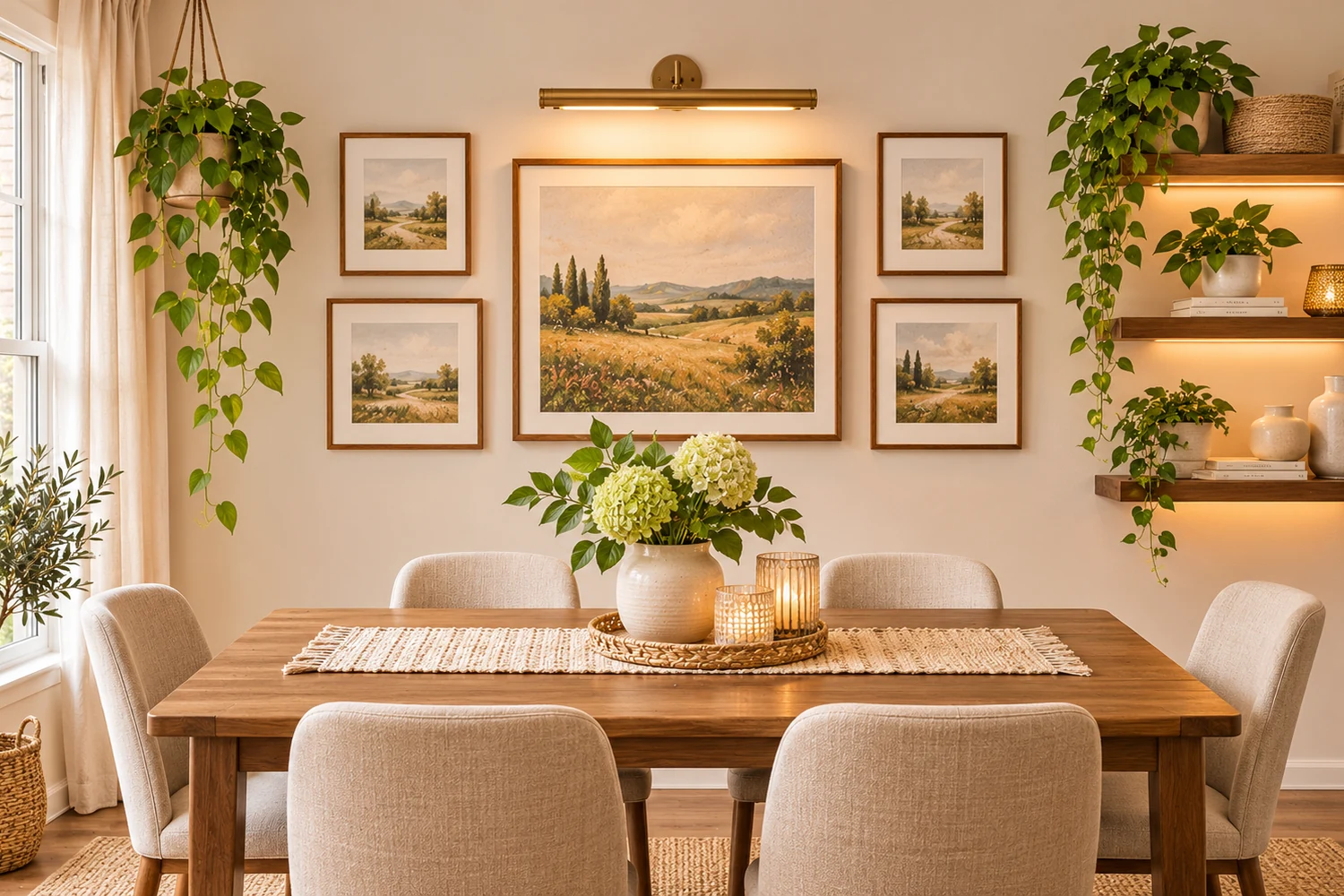
A small picture light or pair of sconces can make existing art feel deliberate after dark. In dining rooms, light is part of the experience: it helps people see faces and food, and it changes how the colors in a painting or wall textile read at night.
If you already have a centered canvas above a sideboard, a properly sized picture light may be enough. For a larger wall, paired sconces can create symmetry, especially when the table and cabinet are also centered. Plug-in options can sometimes avoid electrical construction, but exposed cables need a safe, unobtrusive route.
Best for: A dining room that looks complete in daylight but feels flat under one ceiling light at night.
Watch out for: Poorly planned cords, heat near textiles or flammable decor, and unqualified electrical work. Follow fixture instructions and local electrical requirements; use a licensed professional where hardwiring is needed. Test glare while seated before settling on the final position.
11. Hang something personal that relates to gathering
Dining rooms are social spaces, so the best artwork doesn't have to be a generic landscape. A framed handwritten family recipe, an original illustration of a meaningful place, travel photographs, or a print of a favorite local market can start a conversation without feeling overly themed.
Keep the presentation intentional. One personal piece in a beautiful frame often reads better than a collage of unrelated quotations and signs. For documents or photographs you care about, consider archival-quality framing materials and avoid direct sunlight that might cause fading.
Best for: A family dining room, breakfast nook, or apartment where a large renovation isn't practical.
Watch out for: Enlarging a low-resolution image until it looks blurry, or displaying originals in harsh sunlight or a steamy kitchen-adjacent area. If you use artwork made by someone else, obtain suitable rights rather than assuming online images are free to print.
12. Finish a long blank wall with one sculptural accent
A wall sculpture, wood relief, metal composition, or shallow ceramic arrangement can add shape and shadow where flat artwork feels predictable. The strongest versions have a recognizable silhouette and enough negative space around them to remain visible from the table.
This is a good solution for a dining room dominated by straight lines: a rectangular table, tall cabinet, and linear pendant. A round, curved, or organic wall accent can soften the geometry without adding unnecessary pieces elsewhere.
Try this: Photograph the wall from the doorway and use a paper outline to test the size before purchasing. Check the sculpture's depth as well as width. The object may look flat online but project farther from the wall than expected.
Best for: A long dining wall, the end of an open-plan room, or a modern setting that already has a calm palette.
Watch out for: Decorative objects that protrude into chair or walking space, create sharp-edge hazards, or require more mounting support than their packaging provides. Heavy pieces need suitable rated hardware and secure attachment.
Which arrangement works best for your dining space?
| Your room or wall | Arrangement to try first | Why it helps | Main check | | --- | --- | --- | --- | | Long sideboard against a blank wall | One oversized landscape or a triptych | Visually anchors the cabinet | Art-to-furniture proportion | | Small dining nook without a cabinet | A matched pair or framed personal print | Adds character without a huge display | Sightline from a seated position | | Dark dining room with a window nearby | One carefully placed mirror | Can redirect daylight | Unwanted glare and secure mounting | | Narrow end wall | Two tall prints stacked | Uses height rather than width | Door and chair movement | | Dining room with patterned rug or statement light | One quiet artwork or accent paint | Avoids a visually crowded room | Competing colors and focal points | | Open living-dining space | A compact horizontal group above the dining zone | Signals a separate eating area | Group doesn't spill into walkways | | Sideboard where decor changes seasonally | Properly mounted shallow picture ledge | Flexible arrangements | Total weight and falling-object risk |
A practical placement method for art above a sideboard
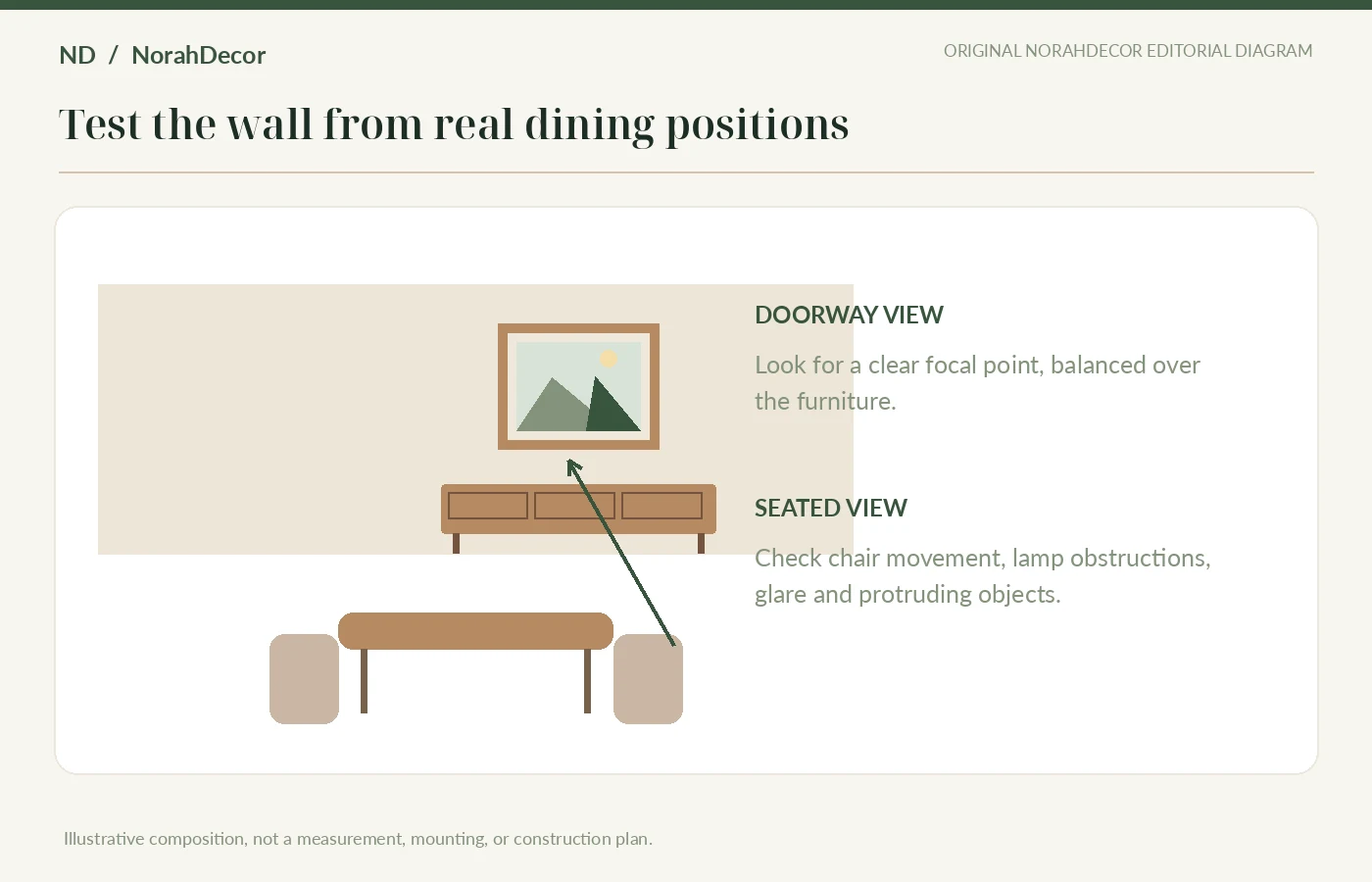
Online guides often give one number for hanging art. That can be a useful conversation starter, but dining rooms rarely behave like empty galleries: a high cabinet, tall lamp, pendant, or unusually low ceiling can change the whole composition.
Use this approach instead:
- Measure the sideboard's actual visible width and height. Don't use the catalog measurement if the furniture is partially blocked or tucked into an alcove.
- Cut a paper template at the outside dimensions of the frame. Include the mat and frame, not just the picture itself.
- Tape the template above the cabinet. Check the gap between the cabinet top and the template. It should appear connected without crowding objects placed below.
- Walk to the doorway and sit in each regular dining position. Note whether the piece looks too high, too small, or hidden behind a lamp or centerpiece.
- Confirm the correct mounting method. Weight, wall substrate, studs or anchors, and manufacturer guidance matter more than visual symmetry. The final installation should be chosen for the actual item and wall, not because a diagram makes it look simple.
If the room has a long, narrow sideboard, you can start by comparing a single wide artwork against three smaller pieces with similar combined width. If there's no cabinet, use the table and the occupied seating zone to establish the relevant composition rather than centering art mechanically on the entire wall.
Remember: These are design checks, not structural, accessibility, or building-code measurements.
Small dining room wall decor: what changes?
Smaller dining rooms benefit from an especially clear hierarchy. The wall may be visually close to every seated person, and a few inches of protrusion can matter more than they would in a large room.
Choose one primary feature. If the pendant lamp is dramatic, keep the artwork calm. If the wall art is vivid, use a simpler table centerpiece. If the room has open shelving full of objects, a blank area of wall may be doing useful visual work.
Use the wall's shape. A narrow wall may favor a vertical pair; a long dining wall may suit a horizontal print or triptych. Don't force a square arrangement into a thin space just because it looks good in another room.
Look from the chairs. A large mirror, textured hanging, or shallow shelf needs to work at close range, not only in a wide-angle photograph.
Keep clutter off the floor. Wall decor can help when the room has no place for a large sideboard, but avoid trading floor clutter for a wall full of objects that people can knock or snag.
If you're working without a separate dining room at all, our small apartment dining area guide explores tables, folding options, and layouts that keep the eating zone functional. Link this only once that article is published.
A simple, affordable plan for a finished dining wall
You don't need to buy everything in one weekend. Try this five-step sequence:
- Day 1: Remove visual noise. Temporarily take down pieces that don't relate to the dining zone. Photograph the wall empty.
- Day 2: Choose one job for the wall. Is it an anchor, a light reflector, a personal display, or a textured background? Avoid combining all four jobs without a plan.
- Day 3: Reuse what you own. Test an existing print, frame, or mirror with paper templates before shopping for new decor.
- Day 4: Check sightlines and mounting. Pull chairs back, switch on lights, inspect the wall surface, and read instructions for the actual hanging product.
- Day 5: Install carefully, then live with it. After secure installation, keep the table styling simple for a week. Add a second piece only if the space genuinely needs it.
Secondhand frames, local art markets, and printable designs you have the right to use can keep costs down. The more important savings come from measuring first and avoiding multiple purchases that do not suit the wall.
Common dining room wall decorating mistakes
Centering everything on the wall instead of the dining zone. A sideboard that's offset because of a doorway may need its artwork centered over the cabinet, not the entire wall. Assess the room as a whole, including the table and pendant.
Hanging art too high to connect with the furniture. Look from seated and standing positions rather than trusting one universal rule.
Choosing the art before checking the chairs. Deep shelves, ceramic displays, and protruding sculptures may create problems in a tight dining room.
Ignoring reflections. A mirror can bounce light beautifully or reflect a bright lamp directly into someone's eyes. Test it after dark.
Overlooking load ratings and wall types. Drywall, masonry, tile, plaster, and wallpaper are not interchangeable mounting surfaces. A decorative adhesive product is not a substitute for proper mechanical support for heavy or fragile items.
Treating the sideboard as an unlimited display platform. A stack of art, tall vases, lamps, and candles underneath a substantial painting can hide the painting and make the whole wall feel crowded. Remove one or two objects first.
Using unsafe or unstable furniture. Tall storage cabinets and tip-prone furniture should be secured appropriately. The U.S. Consumer Product Safety Commission's Anchor It! guidance recommends anchoring furniture with drawers, doors, and shelves to help prevent tip-over injuries.
Frequently asked questions
What should I put on a blank dining room wall?
Start with the wall's relationship to the dining table and any sideboard. A single oversized artwork, a short row of prints, a well-placed mirror, or a textured wall panel can be enough. Choose one focal point before adding smaller objects.
What size art looks right above a dining room sideboard?
There isn't one correct size for every sideboard. Compare the outer dimensions of the frame with the visible cabinet width, then use paper templates to check the composition from the doorway and seated positions. The artwork should feel connected to the cabinet without visually overwhelming it or colliding with lamps and other objects.
How high should dining room wall art be hung?
The ideal position depends on ceiling height, furniture, frame dimensions, and viewing angles. Use a temporary template and check the arrangement while seated and standing. Then confirm the correct installation method for the piece and wall.
Are mirrors a good idea in a small dining room?
They can be, especially when they reflect a window or pleasant view. But test reflections at night and consider whether seated diners would see glare from a pendant light. Heavy mirrors require compatible, secure hardware and wall support.
Can I decorate a dining room wall without drilling?
Sometimes. Freestanding or furniture-supported art and certain approved removable products can work, depending on the wall and object. Not all adhesives are appropriate for textured surfaces, wallpaper, fragile paint, heavy glass, or valuable items. Follow the manufacturer's exact requirements and check lease restrictions where relevant. See our renter-friendly wall decor guide once it is published.
How do I decorate the wall behind a dining bench?
A compact horizontal grouping or one large lightweight-looking composition can give the bench a visual backdrop. Check how the pieces relate to seated heads and ensure no frames, shelves, or breakable objects can be struck by someone getting up or leaning back.
What is better, a gallery wall or one large painting?
A single piece is usually simpler to position and gives the room a calm focal point. A gallery allows more variety and personal stories but needs consistent outer boundaries and careful mounting. Neither is automatically better; choose according to wall shape, furniture, and how visually busy the room already is.
How do I make dining room wall decor look expensive on a budget?
Focus on proportion, framing consistency, and restraint rather than price. Reframe an existing print, group matching frames, or try one well-chosen secondhand piece. A clear focal point with space around it often feels more finished than many inexpensive pieces competing for attention.
The finishing decision
A well-decorated dining wall doesn't have to be full. It has to look deliberate when the room is being used. Start with the furniture and the view from the chairs, identify one purpose for the wall, and test the proportions before you hang anything. That order works whether you choose a large landscape, a small gallery, a mirror, or just a rich paint color.
When the wall supports the room rather than competing with it, even a modest dining corner can feel complete.
Sources and further reading
- U.S. Consumer Product Safety Commission: Anchor It! — furniture tip-over prevention and anchoring guidance.
- 3M Command Picture Hanging Strips (U.S. product guidance) — surface compatibility and product-specific weight and use restrictions. This is one example, not a universal recommendation for mirrors or heavy art.
- 3M Command Picture Hanger instruction sheet — preparation, cure timing, installation, and removal instructions for a specific product; always follow the package for the item actually used.