Outdoor & Backyard
12 Small Patio Ideas for Cozy Outdoor Living
Twelve practical small patio ideas for comfortable seating, flexible furniture, plants, privacy and safe evening lighting in a compact outdoor space.
- Published
- November 12, 2026
- Reading time
- 12 minutes
- By
- NorahDecor Editorial
A small patio becomes useful when it supports a real outdoor routine. That might be coffee for one, dinner for two, reading in the shade, or talking with a few friends. Trying to accommodate every possible activity usually produces too much furniture and too little room to move.
The best small patio ideas protect the practical parts first: the door opens, water can drain, furniture stays stable, and a safe route remains available. Once those conditions are clear, a compact seating plan, a few well-chosen containers, and evening light can make the space feel like a genuine extension of home.
These twelve ideas focus on ground-level patios and small courtyards rather than balconies. Check property rules, leases, local requirements, and product instructions before fixing anything to a building or adding electrical equipment.
Start with exposure, drainage, and access
Observe the patio at several times of day. Note direct sun, reflected heat, shade, prevailing wind, and where rain collects. A plant that thrives in morning sun may struggle against a hot west-facing wall. A light folding chair may be convenient in calm weather but unsuitable for an exposed site without secure storage.
Open every door and gate fully. Mark the path from the home to the yard, bin area, or other exit. Locate drains, downspouts, utility access, and exterior outlets. Furniture, rugs, planters, and storage boxes should not cover drainage points or make essential access difficult.
Measure the usable area after those zones are removed. Then choose one primary purpose for the patio. A clear priority produces a calmer, more comfortable result than filling the perimeter with unrelated pieces.
1. Build the layout around one main activity
Decide what you want to do outside most often. For conversation, face seats toward one another. For meals, give the table enough working space for chairs. For reading, prioritize one supportive chair, a small surface, and shade at the time you usually sit outside.
Use tape, chalk, or cardboard to mark the furniture footprints. Include the space a person occupies while sitting and the route around them. Test the plan with the back door open. If everyone has to stand whenever somebody enters the home, the arrangement is too tight.
A modest two-seat setup used every morning is more successful than a crowded arrangement designed around an occasional large gathering.
2. Choose appropriately scaled outdoor furniture
Outdoor furniture should be rated for the conditions where it will live and sized for the complete patio. Compare overall depth, not just seat width. Deep lounge furniture can consume a small space quickly, while broad arms and splayed legs may narrow the route more than the seat suggests.
Choose enough furniture for the normal household rather than the largest possible gathering. A compact loveseat can be efficient for two people, but two individual chairs may be easier to reposition. Check dimensions, material care, weight, stability, and how the feet sit on the patio surface.
One shared side table may be enough for drinks and a book. Keep furniture away from drains, door swings, utility access, and any route that needs to remain open.
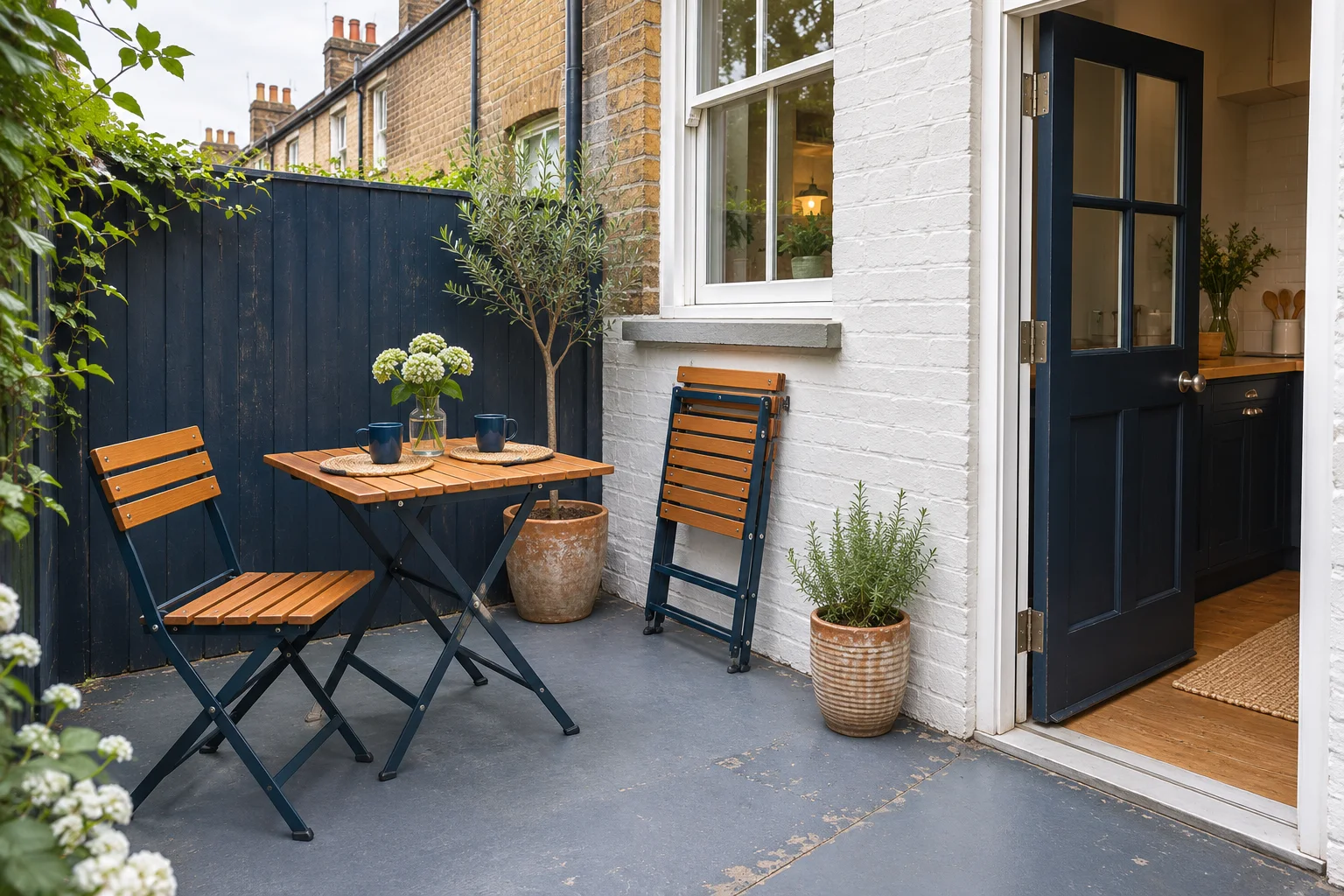
3. Choose folding or nesting furniture
Folding chairs and bistro tables let the patio change between eating, gardening, and open floor space. Nesting side tables offer two surfaces when needed and one compact footprint afterward.
Inspect hinges and locking mechanisms. A folding chair should open securely on the patio surface without rocking, and fingers should stay clear of moving joints. Store folded pieces so wind cannot lift them or push them against glass. Follow the manufacturer's storage and weather guidance.
Flexibility works only when the furniture is easy to move. If the folded table is heavy, awkward, or blocked behind planters, it will probably remain open. Test the action before buying and decide where every piece will go.
4. Create a comfortable outdoor conversation area
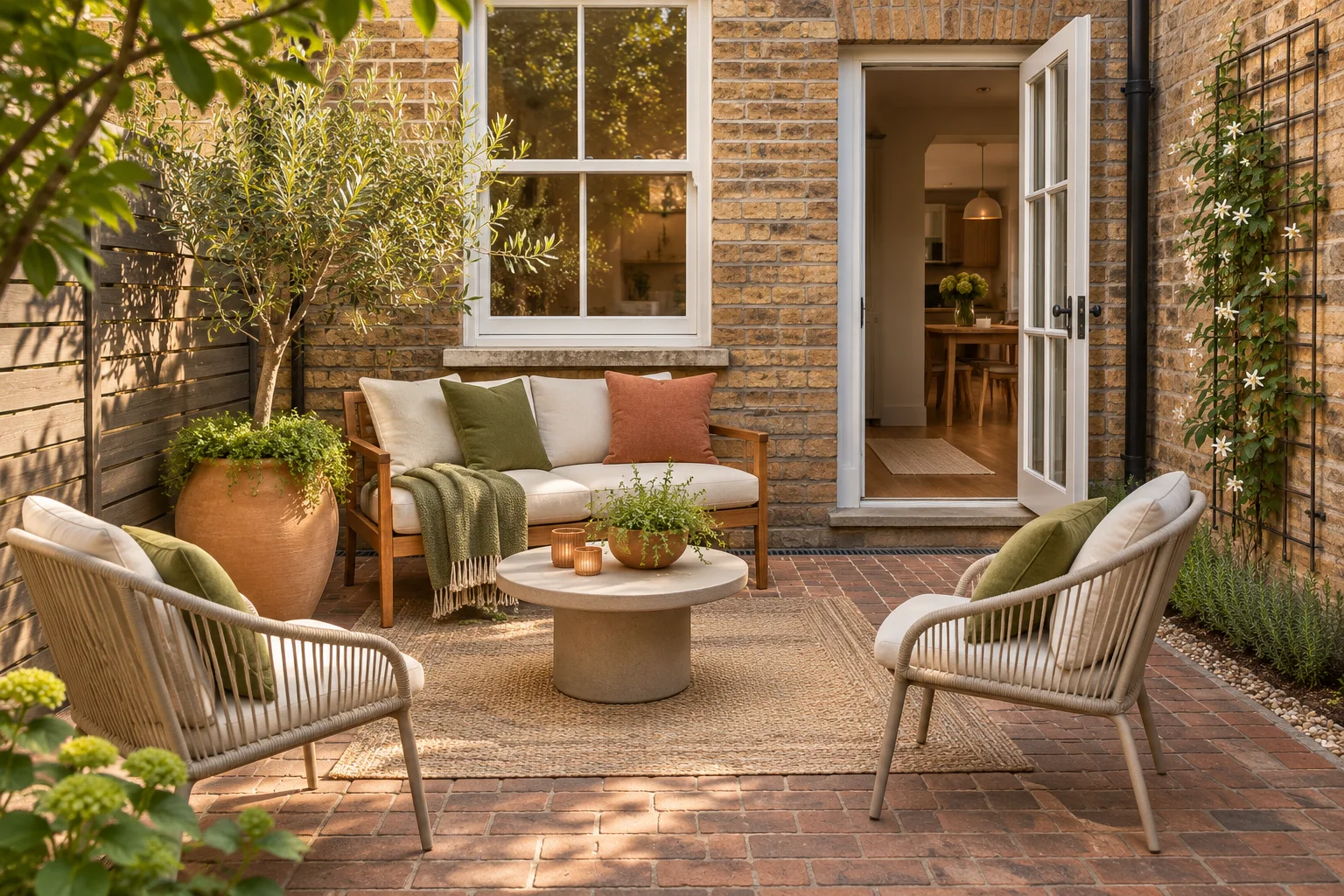
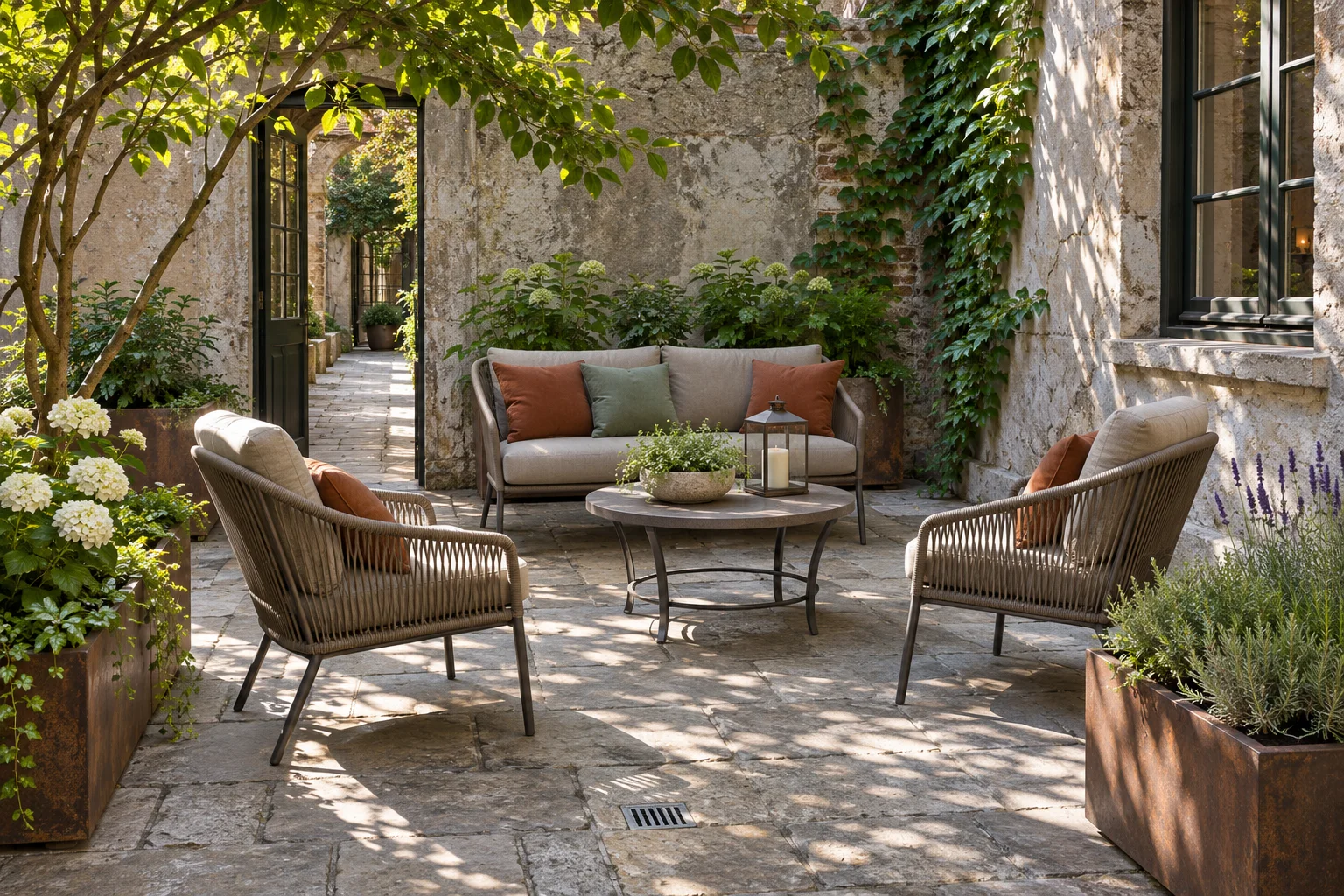
Two chairs and a loveseat can form a sociable group without lining every wall. Angle the chairs toward the center and use a small round table that can be reached from more than one seat. Leave the main route outside the arrangement rather than through it.
A compact bench can seat two without adding multiple chair legs. Place it against a solid edge only where it does not obstruct vents, doors, or maintenance access. A fitted cushion is visually calm and easy to bring inside when weather requires.
If extra seating is needed occasionally, add a folding chair rather than keeping another lounge chair in the path all season. Test whether people can sit, stand, and enter the home without asking everyone else to move.
5. Use an outdoor rug where conditions permit
An outdoor-rated rug can soften a seating group and visually define the area. It must let doors open, avoid curled edges in a route, and allow the surface below to dry according to local conditions and material guidance.
Do not cover a drain or use a rug to disguise persistent water. Lift and clean it as required, then inspect the patio beneath. In a damp or very small area, bare pavers or concrete may be more practical.
Choose a size that supports the furniture rather than a small mat floating beneath the table. If chair legs repeatedly catch an edge, remove the rug or change the layout.
6. Add containers and vertical greenery
Many small pots can make a patio difficult to clean and dry out quickly. A few larger containers create stronger visual anchors, give compatible plants more root space, and reduce the number of objects around your feet.
Large planters become heavy when filled and watered. Decide their positions before filling them, confirm that the surface can support the load, and use a suitable potting mix rather than dense garden soil. Protect drainage openings and manage runoff without sending water toward the building or a neighbor.
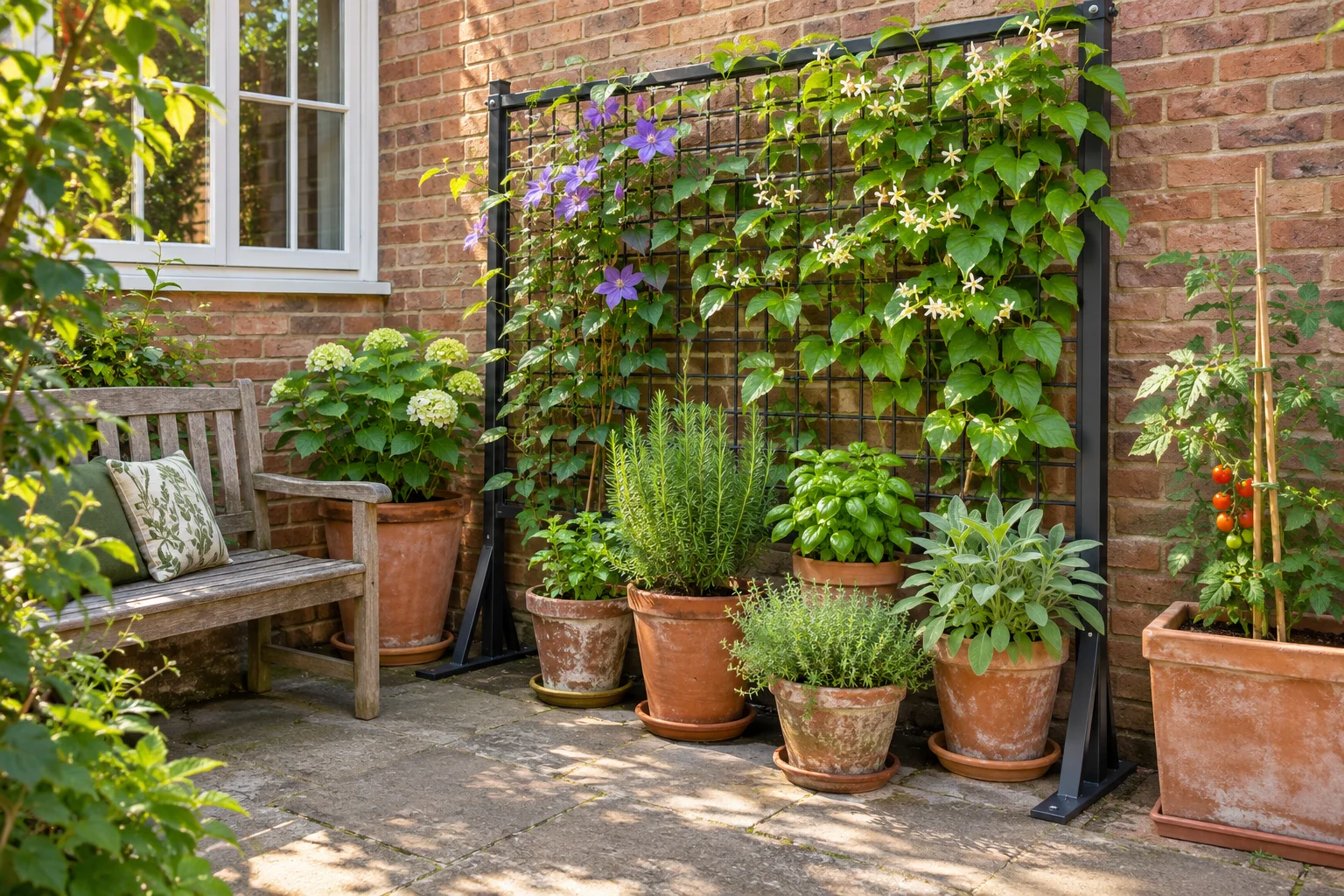
Repeat a container material or color for cohesion, but vary plant height and texture. A supported trellis can carry climbers above a small footprint, while a narrow stand can arrange herbs at several heights. Freestanding systems still need stability appropriate to the loaded weight and wind exposure.
Select plants for the actual light, climate, container depth, and mature size. Penn State Extension notes that container-grown plants depend on the gardener for water and nutrients and that containers need drainage. Keep growth away from doors, lights, vents, and walkways.
7. Add privacy without turning the patio into a box
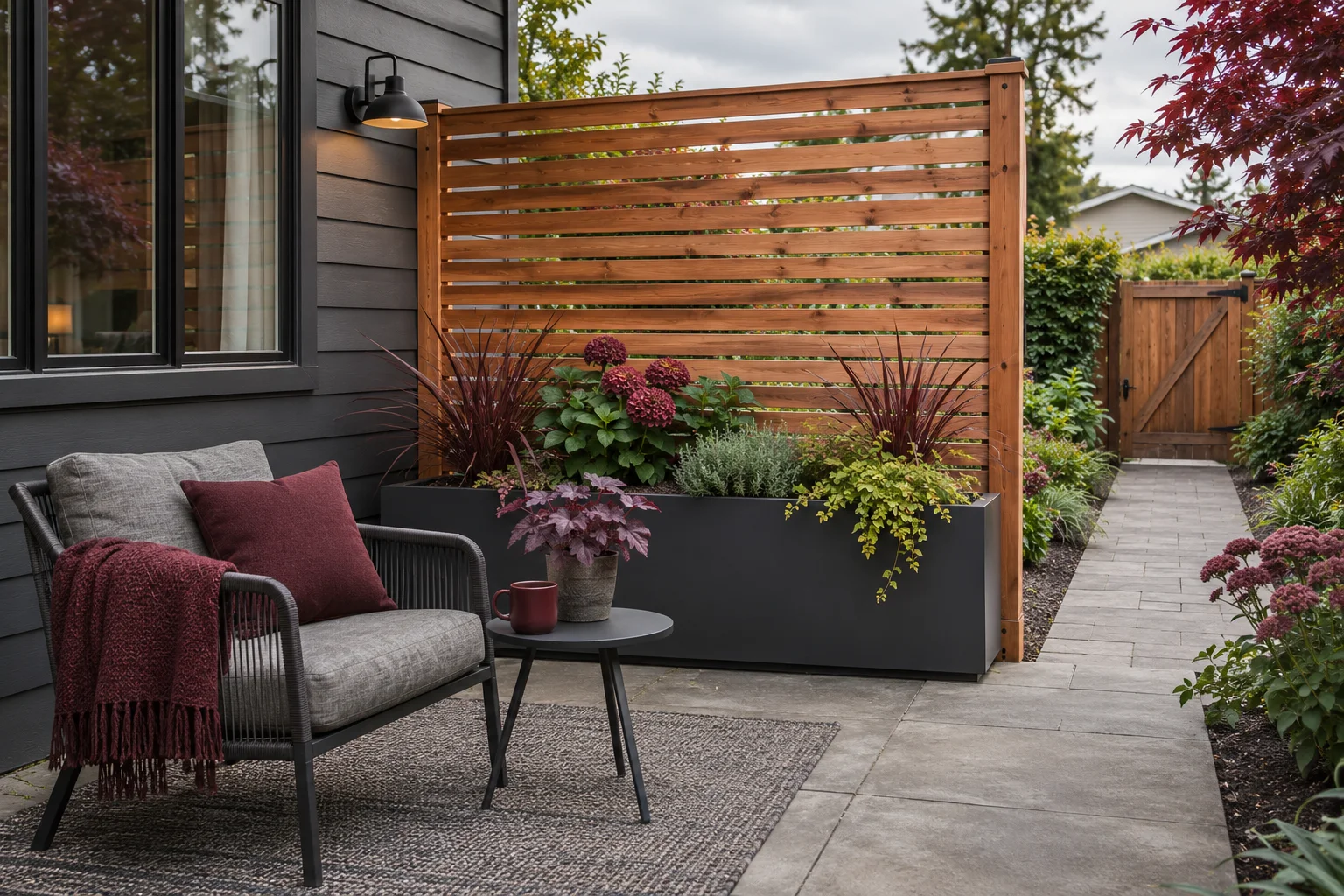
Privacy may come from one strategically placed screen, a trellis with seasonal growth, or a tall planter rather than enclosing every side. Stand and sit in the space to identify the actual sightline. Screening the needed angle often preserves more air and daylight.
Permanent screens may require permission, structural review, or compliance with local rules. Wind pressure on a broad panel can be substantial. Do not rely on a lightweight planter to stabilize a tall screen unless the product is engineered for that purpose.
For a rental, a lower freestanding panel or planted trellis may be more practical, provided it is stable and allowed. Keep gates, routes, utilities, and required separations clear.
8. Layer safe lighting for evening use
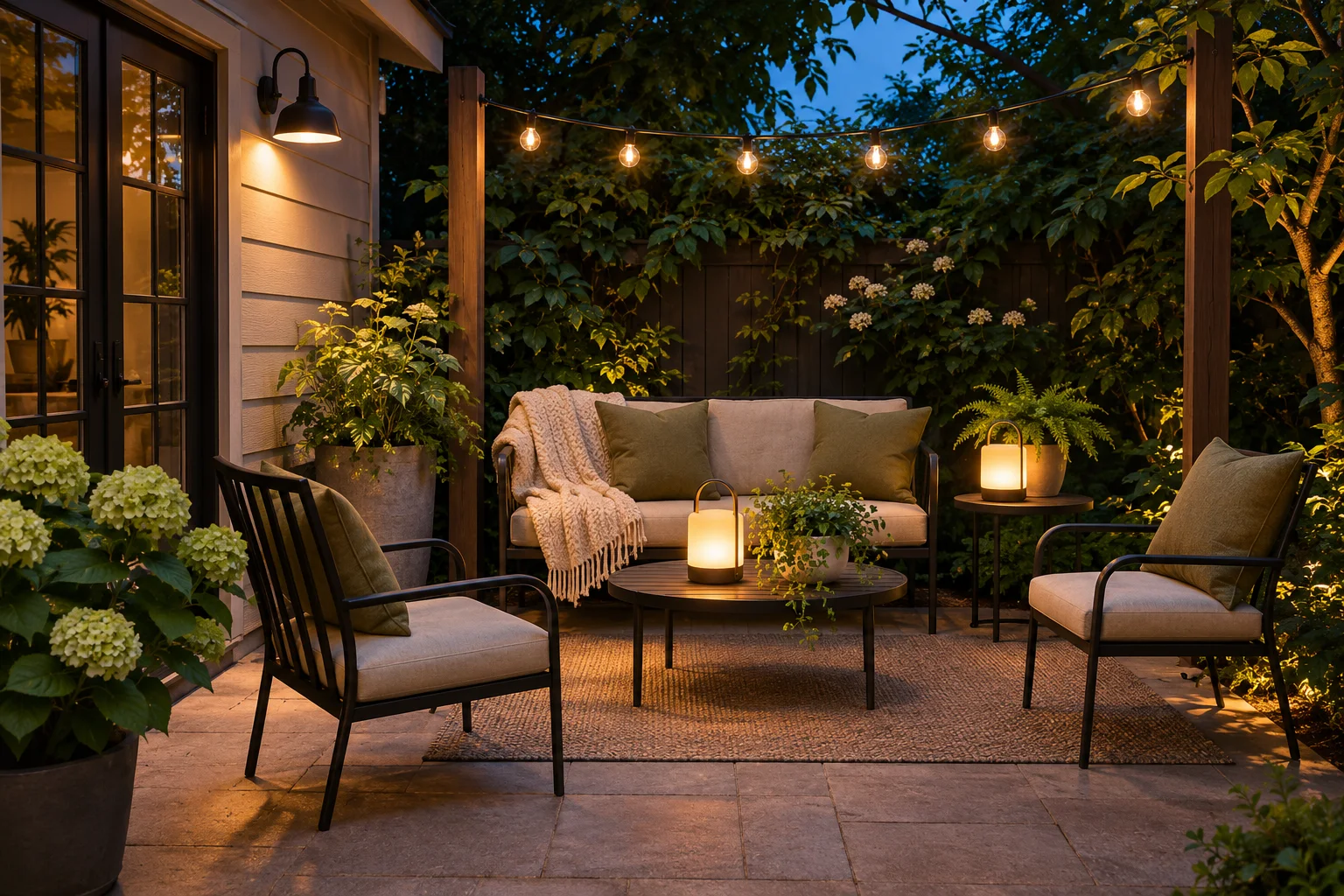
Start with the light needed at doors, steps, and routes. Add a warm wall light, rechargeable table lantern, or properly installed outdoor-rated string lights for atmosphere. Avoid glare aimed into neighboring windows.
The Electrical Safety Foundation International advises using products rated for outdoor use, weatherproofing outdoor receptacles, and using ground-fault circuit interrupter protection where required. Do not use an indoor extension cord outside. Keep connections dry and follow all product and local electrical requirements. A qualified electrician should handle work beyond plug-in equipment.
Open flames add risk in a compact, planted area. Rechargeable lanterns can provide a candle-like glow without a flame, but they still need charging, storage, and weather care according to their instructions.
9. Incorporate compact weather-resistant storage
A small outdoor-rated bench or deck box can hold approved cushions and hand tools, but it should not take the best seat or block the path. Measure the lid or door when fully open and confirm that the base will not cover drainage or trap water against the building.
Weather-resistant does not always mean watertight. Follow the product's intended use, ventilation, load, and anchoring instructions. Do not store chemicals, electrical products, damp textiles, or anything else the container is not designed to hold.
Storage inside the back door may be the better small-patio solution. A nearby shelf or cupboard protects textiles without adding another large object outdoors.
10. Add a small dining or coffee-table arrangement
A bistro table supports meals and laptop work in a small footprint, while a lower coffee table suits conversation and drinks. Choose the height for the seats and primary activity rather than expecting one surface to do everything equally well.
For dining, allow the chairs to pull out without crossing the door or main route. A round top can soften a corner, and a pedestal may provide useful knee room. For lounge seating, one shared coffee table is usually calmer than several side tables.
Keep the tabletop light enough to clear but stable in normal use. Bring serving pieces and lightweight accessories inside when wind increases.
11. Use color and textiles to make the patio inviting
Repeat one or two colors or materials from the adjacent room so the view through the door feels intentional. Warm wood, a muted green cushion, or a terracotta pot can create continuity without turning the patio into a copy of the interior.
Choose outdoor-rated cushions and throws, then follow their cleaning, drying, and storage instructions. Limit the palette so the plants and changing daylight remain part of the composition. One distinctive choice, such as a rich cushion color or sculptural planter, is enough.
Avoid leaving loose textiles outside when wind or rain is expected. A welcoming patio should be easy to reset, not dependent on a pile of accessories.
12. Adapt the patio for different seasons
Outdoor rooms are exposed rooms. Decide where cushions, lanterns, and folding pieces go before rain, frost, or wind arrives. Clean and maintain wood, metal, woven materials, and textiles according to their different manufacturers.
Shade can make a hot patio usable, but an umbrella needs a compatible weighted base and space to open. Close and secure it as directed when not in use or when weather changes. In colder or wetter months, remove items that cannot tolerate local conditions and keep drainage clear of leaves or debris.
Review forecasts and respond to local watches and warnings. The National Weather Service warns that strong winds can damage property and turn unsecured objects into hazards. Bring lightweight furniture, pots, and accessories inside before conditions make outdoor work unsafe.
A quick small-patio plan
- Observe sun, shade, wind, heat, and drainage through the day.
- Mark doors, gates, drains, utilities, and the route that must remain clear.
- Choose one primary activity and tape out the furniture at full working size.
- Select outdoor-rated pieces with stable feet and a realistic weather-storage plan.
- Choose containers for local conditions, mature plant size, and drainage.
- Add privacy or shade only after checking permission, structure, and wind exposure.
- Test routes and lighting after dark, then remove anything that creates a trip or electrical hazard.
Common mistakes on a small patio
Filling every edge with furniture. Perimeter seating can leave no usable route through the center.
Blocking drainage. Rugs, storage boxes, and planters should not cover drains or trap water against the building.
Choosing plants by appearance alone. Light, climate, mature size, water, and container depth determine whether a plant belongs there.
Leaving lightweight pieces outside in wind. Folding furniture and accessories need secure storage before hazardous conditions.
Using indoor electrical products outdoors. Outdoor ratings, protected receptacles, dry connections, and appropriate GFCI protection matter.
Treating privacy screens as decoration. Broad panels and tall trellises need permission and structural stability for the site.
Frequently asked questions
What furniture works best on a very small patio?
Choose for the main activity. Two compact chairs and a shared table, a small loveseat, or a folding bistro set can work. Measure the furniture in use and preserve the door, drain, and main route.
How can I make a small patio private?
Identify the specific sightline and screen that side with an allowed, stable panel, trellis, or planting. Avoid enclosing the entire area if one well-placed element solves the problem.
Can I leave outdoor cushions outside all season?
Follow the fabric and furniture manufacturer's care instructions. Even outdoor-rated cushions may need to be dried, cleaned, covered, or stored during severe weather and off-season conditions.
How many plants should a small patio have?
There is no fixed number. A few appropriately sized containers are often easier to water, clean around, and protect from wind than many small pots. Choose plants for the site and their mature size.
Are string lights safe on a patio?
They can be when specifically rated for outdoor use, installed and supported as directed, connected to suitable protected power, and kept clear of doors and damage. Follow local requirements and use qualified electrical help where needed.
Sources
- Electrical Safety Foundation International: Outdoor decoration safety for outdoor-rated equipment, receptacle protection, and safe connection practices.
- Electrical Safety Foundation International: Ground-fault circuit interrupters for the purpose and testing of GFCI protection.
- Electrical Safety Foundation International: Extension cord safety for selecting and using extension cords appropriately.
- Penn State Extension: Container gardening for container drainage, potting media, watering, and plant selection considerations.
- National Weather Service: High wind safety for wind watches, warnings, and the hazards posed by unsecured objects.
Image note: The patio images in this article are AI-generated conceptual illustrations. They do not document a real property, completed installation, or first-hand product test.