Bedroom Decor
12 Small Bedroom Ideas That Make Tiny Rooms Feel Bigger
Twelve practical small bedroom ideas for choosing the right bed, preserving clearance, adding useful storage and creating a calm room without unrealistic remodeling.
- Published
- November 12, 2026
- Reading time
- 13 minutes
- By
- NorahDecor Editorial
A tiny bedroom rarely needs a visual trick as much as it needs a better plan. When a bed fills most of the floor, the wrong nightstand can block a drawer, a deep dresser can narrow the only walking route, and storage boxes can become impossible to reach. The room may look crowded because everyday movement has not been accounted for, not because the walls are the wrong color.
The most useful small bedroom ideas start with the bed, then work outward. Decide where you need to stand, which doors must open, and what has to be stored in the room. Once those practical decisions are settled, lighting, textiles, art, and color can make the bedroom feel personal rather than improvised.
These twelve ideas work for narrow rooms, apartment bedrooms, queen-bed layouts, rentals, and bedrooms with little or no closet space. Some involve drilling or anchoring. Others only require moving furniture and measuring more carefully.
Make a measured plan before moving the bed
Measure the room wall to wall, but do not stop there. Record the door opening, window position, baseboards, radiators, outlets, closet doors, and any low ceiling areas. Then measure the complete bed frame, not only the mattress. Upholstered rails, a wide headboard, and projecting feet can add several inches that matter in a tight room.
Sketch the room and mark these working zones:
- The route from the door to the bed and closet.
- The space needed to open wardrobe doors, drawers, and under-bed storage.
- A comfortable place to stand while making the bed.
- Access to windows, heating equipment, and any required escape route.
If you are considering a queen bed, outline the actual frame on the floor with painter's tape. Add the nightstand, dresser, and open drawer positions too. A bed can technically fit while leaving the rest of the bedroom frustrating to use.
1. Choose a bed size that leaves room for the bedroom
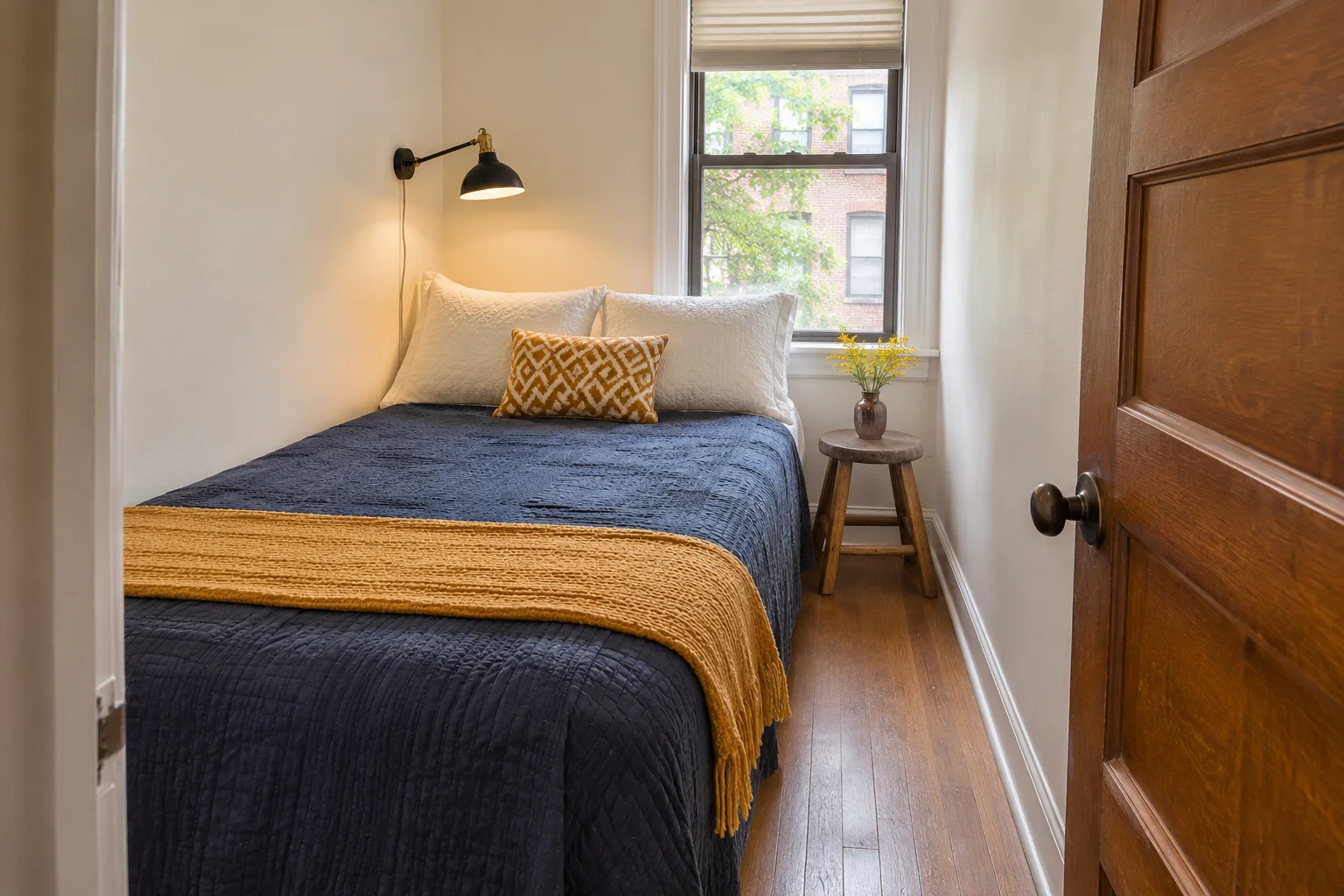
The largest bed that fits between two walls is not automatically the right bed. Consider who sleeps there, how often the room is used, and what else must happen in it. A queen may be worthwhile for two regular sleepers. A full bed can free valuable width in a narrow guest room or one-person bedroom. A twin or daybed may be enough when the room also needs to function as a study.
Look at the frame as closely as the mattress. Thick upholstered sides and a wide sleigh-style headboard consume more floor area than a slim wood or metal frame around the same mattress. A low-profile bed can reduce visual bulk, although it should still be comfortable to get in and out of.
Before buying, confirm that the frame and mattress can travel through the building entrance, stairs, hallway, and bedroom door. Delivery dimensions matter just as much in an apartment as final dimensions.
2. Protect practical clearance around the bed
Clearance is not an abstract number. It is the space that lets you reach the closet, change the sheets, and get out of bed without turning sideways around a sharp corner. Test it using your own routine.
In a queen-bed layout, equal space on both sides may be ideal, but some tiny rooms cannot provide it. Placing one long side nearer a wall can be a reasonable compromise for one sleeper or an occasional guest room. For two regular sleepers, access from both sides is generally more comfortable, so reducing another piece of furniture may be the better decision.
Keep the route to the door and any required bedroom window clear. Open every drawer and door while evaluating the layout. A dresser that leaves a passable aisle when closed may block the whole room when a drawer is open.
3. Replace bulky nightstands with compact alternatives
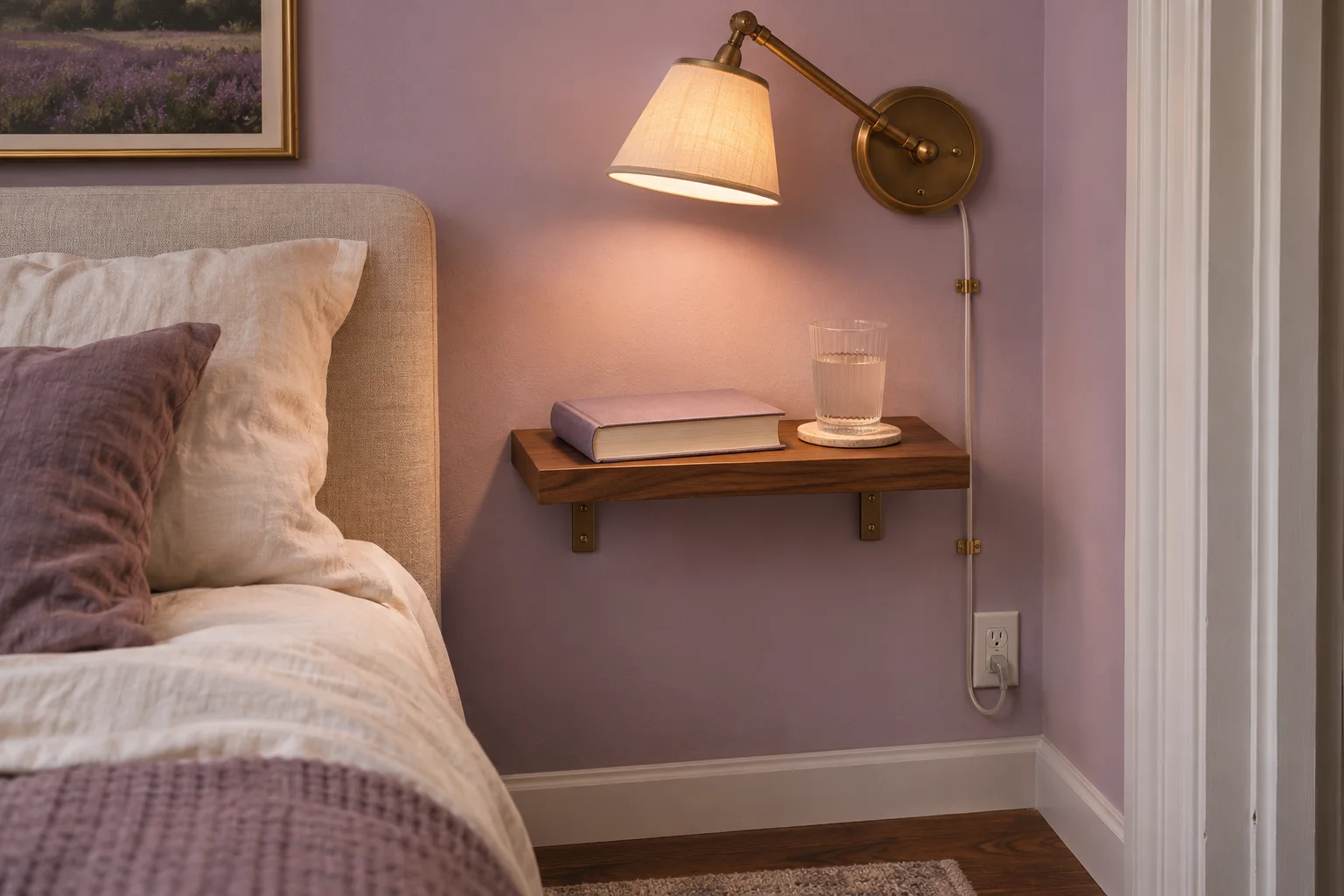
A bedside surface only needs to hold what you genuinely use overnight. A narrow shelf, small stool, compact pedestal table, or slim one-drawer unit may be enough for a phone, water glass, and book.
Wall-mounted shelves keep the floor visible and can make cleaning easier, but they require appropriate fasteners for the wall type and intended load. Check for wiring and other services before drilling. In a rental, a small freestanding table is often simpler than mounting a shelf without permission.
Avoid shelves with sharp corners projecting into a narrow route. Also check how far a drawer pulls out. A tiny cabinet can still be awkward if it collides with the bed frame every time it opens.
4. Move bedside lighting onto the wall
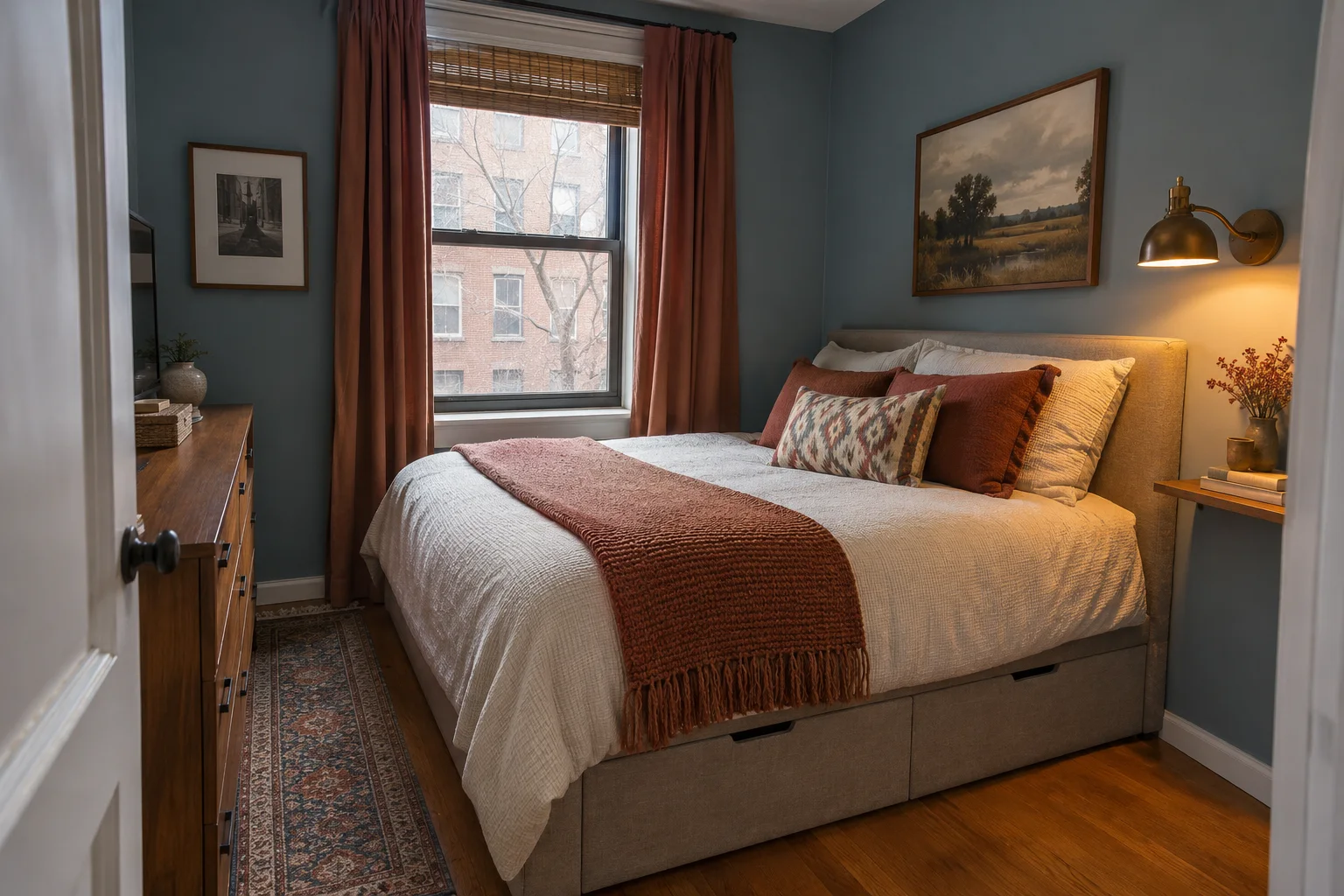
A wall-mounted light can recover most of a small nightstand for actual use. Plug-in sconces reduce the need for electrical work, while hardwired fixtures create a cleaner result when a qualified professional and the property rules allow it.
Position the light where it illuminates a book without shining directly into your eyes. Consider how the arm moves, whether the shade becomes hot, and where the switch will be reached from bed. Route plug-in cords securely down the wall, away from bedding and walking paths. Do not hide an extension cord beneath a rug or use an improvised connection as permanent wiring.
For a no-drill rental change, a compact shaded table lamp can still work. Choose one with a stable base and a scale that leaves room for the essentials.
5. Make under-bed storage easy to open
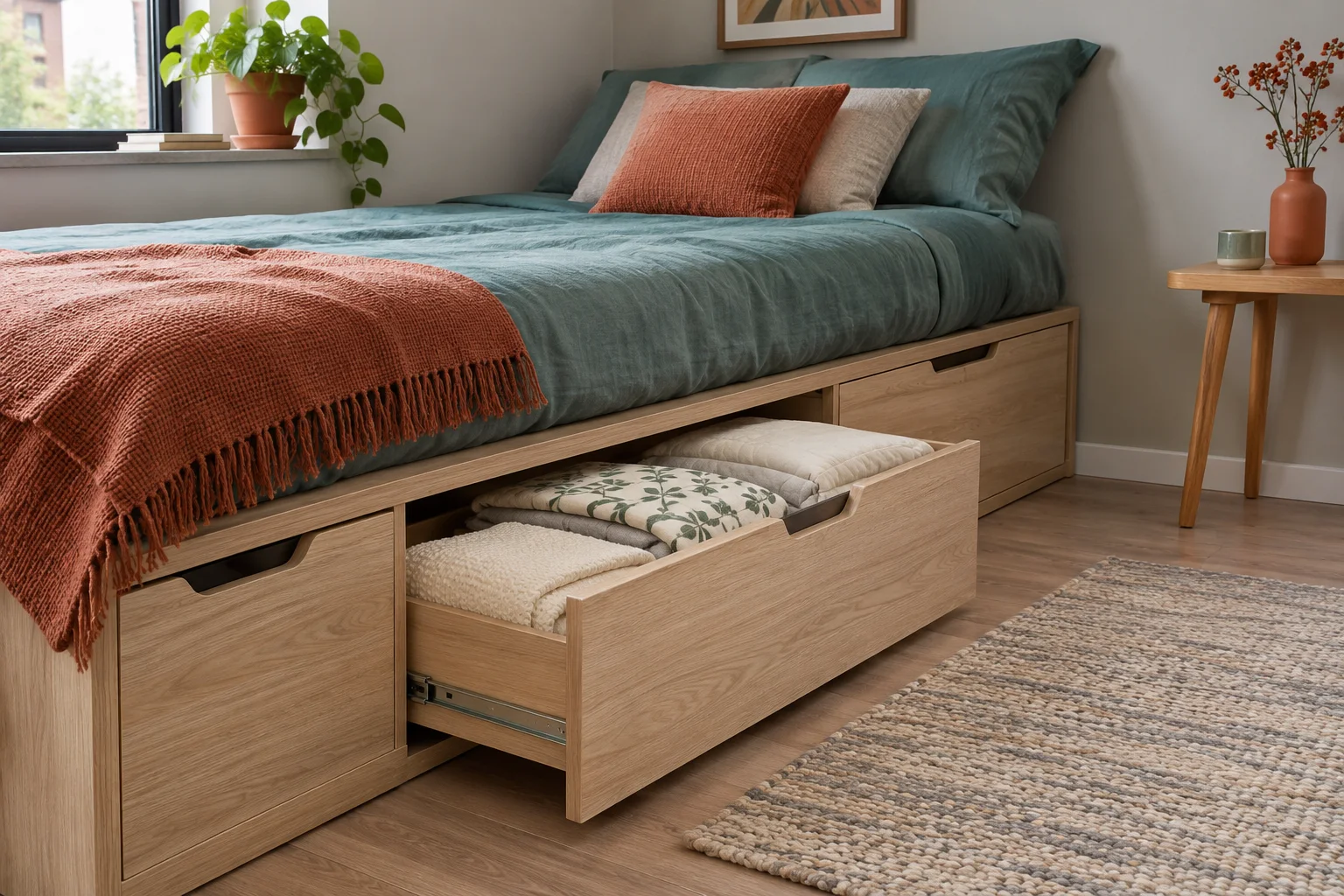
Under-bed space can replace part of a dresser, but only when the storage is accessible. Integrated drawers work well when they can extend fully. Lidded boxes suit seasonal bedding or occasional clothing. Soft zippered bags can fit a lower frame, provided the floor is clean and dry.
Measure vertical clearance at the lowest part of the frame and horizontal clearance beside it. A beautiful drawer is useless if it opens into the wall, a radiator, or a thick rug. If the bed sits close to one wall, use containers that can be reached from the accessible side.
Store clean, dry textiles and label anything you cannot see through. Vacuum bags may save volume for some sturdy items, but they are not suitable for every fabric. Follow care guidance for delicate or structured pieces.
6. Choose wardrobes and dressers by depth as well as width
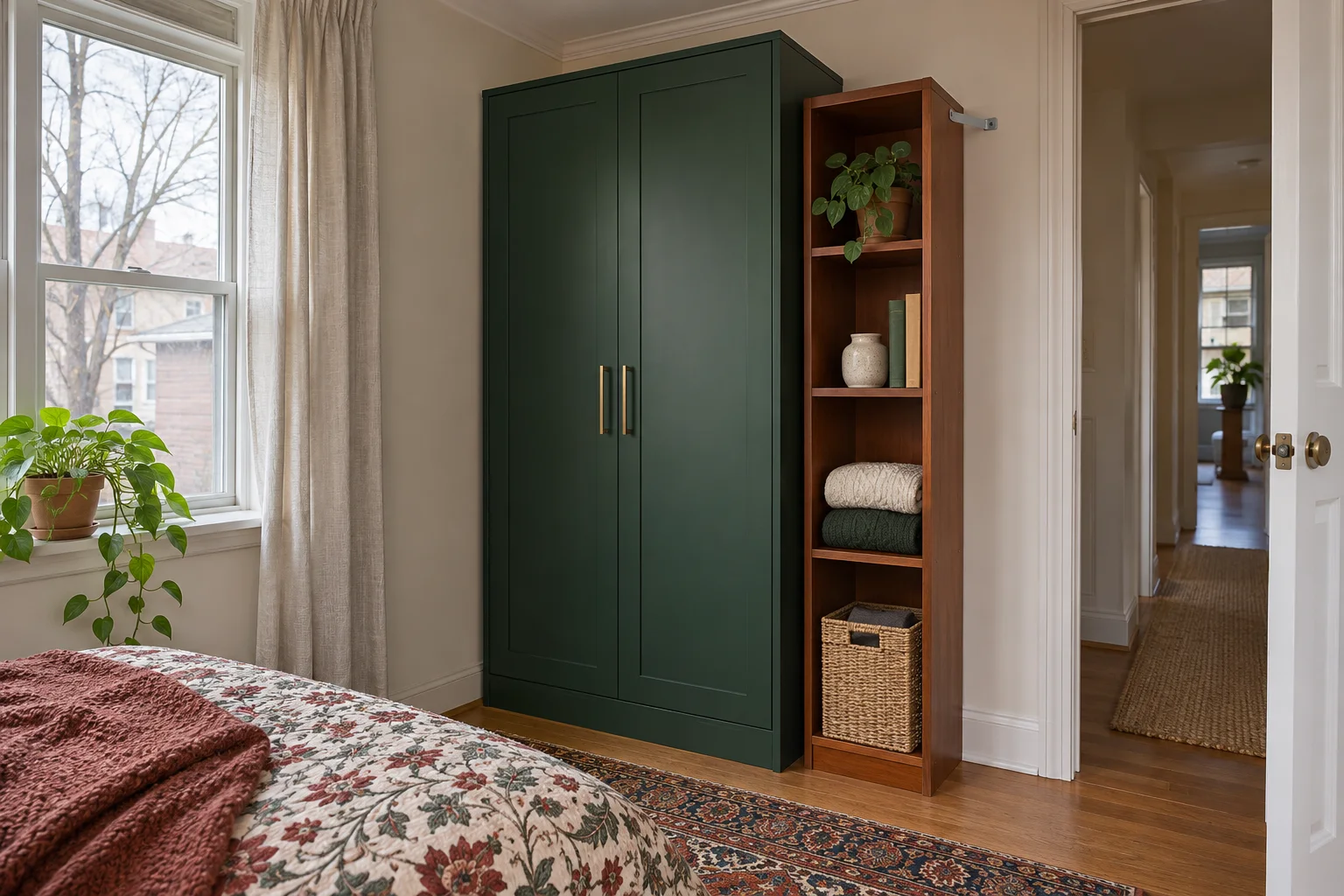
In a small bedroom, a few inches of furniture depth can determine whether the route feels comfortable. A shallow wardrobe may fit a narrow wall better than a standard deep unit, but check whether it can hold your hangers without forcing the doors outward. Sliding wardrobe doors avoid a door swing, although their tracks and internal access have trade-offs.
For folded clothing, compare a low wide dresser with a taller narrow one. The taller piece uses less floor width, but it must be stable and anchored as its manufacturer directs. The U.S. Consumer Product Safety Commission advises securing dressers, wardrobes, and other top-heavy furniture to help prevent tip-over injuries. Keep heavier items in lower drawers and do not place objects on top that encourage children to climb.
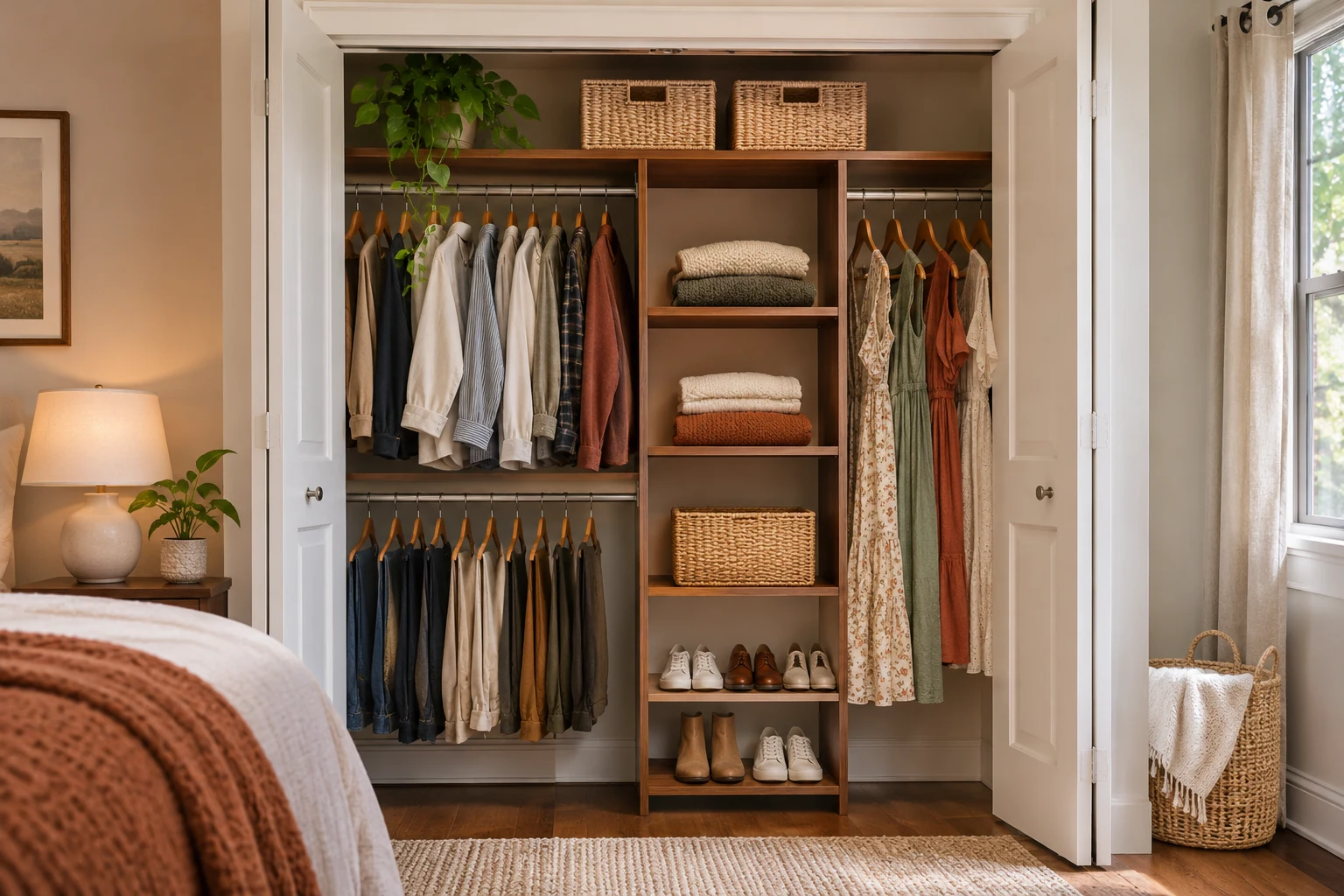
If the room has limited closet space, divide storage by frequency: everyday clothes at reachable height, occasional items above, and bulky seasonal pieces somewhere dry outside the bedroom when possible.
7. Use vertical space without covering every wall
A high shelf, narrow bookcase, or row of hooks can help when the floor is full. The most effective vertical storage has a specific job. A shelf above a dresser might hold two light seasonal boxes. Hooks behind a door might hold tomorrow's outfit and one bag. Neither needs to become a display of everything you own.
Keep heavy items lower, and avoid deep shelves above the bed. Loaded shelving requires mounting hardware suited to the wall construction and expected weight. Adhesive hooks and strips have exact surface, size, and load limits; they are not substitutes for structural shelf hardware.
Leave some wall open around tall storage. A room can feel more settled when one useful vertical unit replaces several scattered racks and baskets.
8. Place mirrors where they reflect useful light
A mirror can move daylight deeper into a bedroom when it faces or sits beside a window. It can also double the appearance of a crowded clothes rack, so check the reflection before choosing a position.
Medium mirrors are often easier to place safely than oversized leaning designs. Use mounting hardware rated for the mirror, the wall, and its weight. A heavy mirror resting on the floor still needs an appropriate safety restraint, particularly in homes with children or pets.
Mirrored wardrobe doors can combine two jobs, but they show fingerprints and reflect a large portion of the room. Choose them because the reflection helps the space, not because every small bedroom supposedly needs a mirror wall.
9. Layer lighting instead of overloading one fixture
Small bedrooms still need different types of light. General light helps with dressing and cleaning. A bedside or wall light supports reading. A softer lamp can make the room comfortable before sleep.
Brightness is measured in lumens, not watts, so compare the output listed on bulb packaging. Choose brightness for the task and use compatible color temperatures so the room does not shift from icy white in one corner to deep amber in another unless that contrast is intentional.
A dimmer can add flexibility when the fixture and bulb are compatible. Plug-in lights are useful in rentals, but cords must remain clear of doors, rugs, and walking routes. Permanent wiring should be completed by a qualified professional where required.
10. Use bedding and curtains to connect the room
Bedding covers one of the largest surfaces in the room, so it can establish the palette without any paint. Repeat one or two colors from the bedding in curtains, a small rug, or art, then let the furniture provide contrast.
Curtains should suit the window and the practical conditions around it. Measure the full area, check whether panels can stack clear of the glass, and keep fabric safely away from radiators, baseboard heaters, and other heat sources. Floor-length curtains can look calm, but only if they do not bunch in a narrow path or block a vent.
Do not assume pale paint is the only way to make a bedroom feel larger. A deeper color can make a small room feel deliberate and comfortable when the lighting, contrast, and furniture scale are well considered.
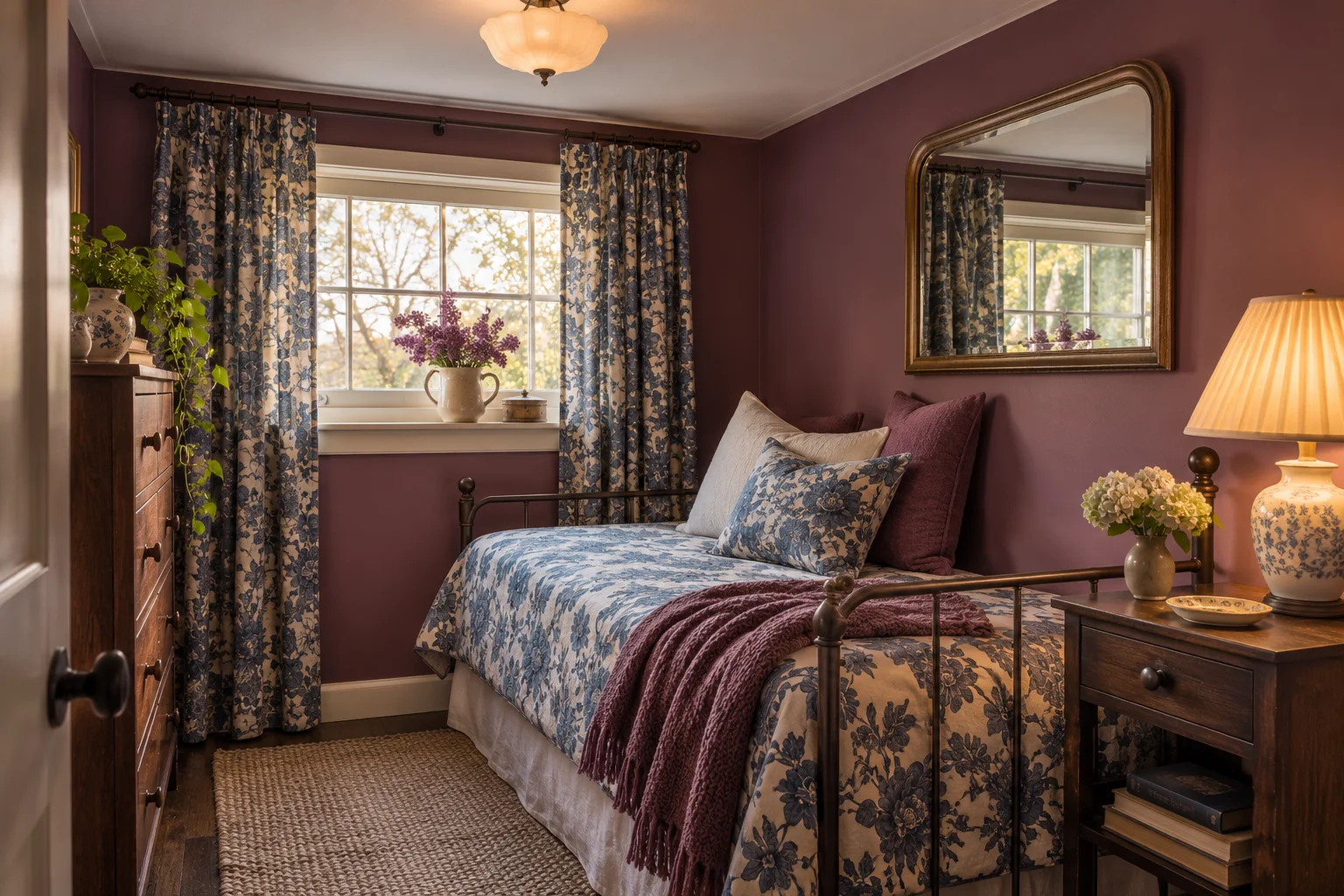
11. Add personality through a few intentional pieces
Small bedrooms do not need to be visually empty. They need fewer objects competing for the same surface. Choose a photograph, textile, ceramic piece, or artwork that matters to you and give it enough space to be noticed.
One framed work above a dresser may feel calmer than a collection spread across every wall. If you create a small grouping, arrange paper templates before mounting anything. Match the hanging method to the frame weight and wall surface, and follow the product instructions. Removable hanging products are useful only within their stated limits and should not hold valuable or irreplaceable objects.
Keep the top of the dresser partly clear for daily use. A personal room should feel inhabited, but not require moving decorations before putting down a watch or folding laundry.
12. Keep the final furniture arrangement simple
The last improvement may be removing a piece rather than adding one. A second nightstand, upholstered bench, accent chair, and wide dresser can each be attractive, yet together they may leave no comfortable path through a tiny room.
Give every large item a job. If you never sit on the bedroom chair because it holds clothes, a wall hook and a small open area may serve you better. If a bench prevents under-bed drawers from opening, it is working against the storage you already have.
Walk the room with a laundry basket in your hands. Open the closet, drawers, and bedroom door. Make the bed from both accessible sides. The arrangement that supports those ordinary actions will usually feel more spacious than one designed only for a photograph.
What to change first in different small bedrooms
For a narrow bedroom: Start with bed width and frame thickness, then replace one deep bedside table with a slim surface. Keep the long route from door to window or closet as direct as possible.
For a queen bed in a tiny room: Tape the complete frame footprint on the floor. Test access on both sides, and consider under-bed storage instead of adding another dresser.
For limited closet space: Choose one stable wardrobe or appropriately sized dresser, use under-bed storage for occasional textiles, and connect this plan with our small closet organization ideas.
For a rental: Begin with furniture placement, lamps, textiles, freestanding storage, and hanging products approved for the surface and load. Review the lease before drilling, painting, or mounting furniture.
For a multipurpose apartment bedroom: Keep the sleeping zone visually calm and let one compact desk or dresser do a clear second job. The planning approach in our small apartment decor ideas can help connect the bedroom to the rest of the home.
Common small bedroom mistakes
Buying the mattress before planning the frame. The mattress label does not account for the headboard, side rails, or clearance needed to make the bed.
Treating every empty wall as storage. Deep shelves, over-door organizers, and tall furniture can interfere with doors, light, and circulation. Use height selectively.
Assuming renter-friendly means risk-free. Adhesives have surface and weight limitations, and freestanding dressers can still require anchoring. Check instructions and request property permission when needed.
Trying to solve poor lighting with one brighter bulb. A bright ceiling light does not replace a useful bedside task light, and excessive glare can make the room less comfortable.
Frequently asked questions
Can a queen bed work in a small bedroom?
Yes, but measure the complete frame and the working space around it. A queen may be the right priority for two sleepers, even if that means skipping a second nightstand or choosing under-bed storage. Check that doors, drawers, windows, and necessary routes remain usable.
Should I put a bed against the wall in a tiny room?
It can be a practical choice for one person, a child, or an occasional guest room. Two regular sleepers generally benefit from access on both sides. Consider sheet changing, nighttime access, heating equipment, windows, and escape routes before deciding.
What colors make a small bedroom look bigger?
No single color guarantees that result. Light finishes can reflect available light, but layout, window exposure, furniture scale, contrast, and lighting also matter. A darker palette can work beautifully when the room remains functional and adequately lit.
How can renters add bedroom storage?
Try a bed with built-in drawers, freestanding narrow furniture, a small bedside stool, and surface-compatible removable hooks used within their stated limits. Do not treat temporary products as substitutes for necessary furniture anchoring or load-bearing shelf hardware.
What should I measure before buying bedroom furniture?
Measure the room, doorways, stairs, window and outlet positions, complete furniture dimensions, drawer and door travel, and delivery path. For a bed, include the frame and headboard rather than relying only on the mattress size.
Sources
- IKEA: Mattress buying guide for bed-size and room-planning considerations.
- U.S. Consumer Product Safety Commission: Anchor It for dresser, wardrobe, and furniture tip-over prevention.
- 3M: Command picture-hanging selection guide for product-specific frame size, surface, and weight limitations.
- ENERGY STAR: Learn about brightness for comparing bulb output in lumens.
Image note: The room images in this article are AI-generated conceptual illustrations. They do not document a real bedroom makeover, installed product, or first-hand test.