Entryway & Hallway
12 Small Entryway Ideas That Make Every Inch Useful
Twelve practical small entryway ideas for slim storage, hooks, benches, lighting and no-foyer apartments without blocking doors, walkways or exit routes.
- Published
- November 12, 2026
- Reading time
- 11 minutes
- By
- NorahDecor Editorial
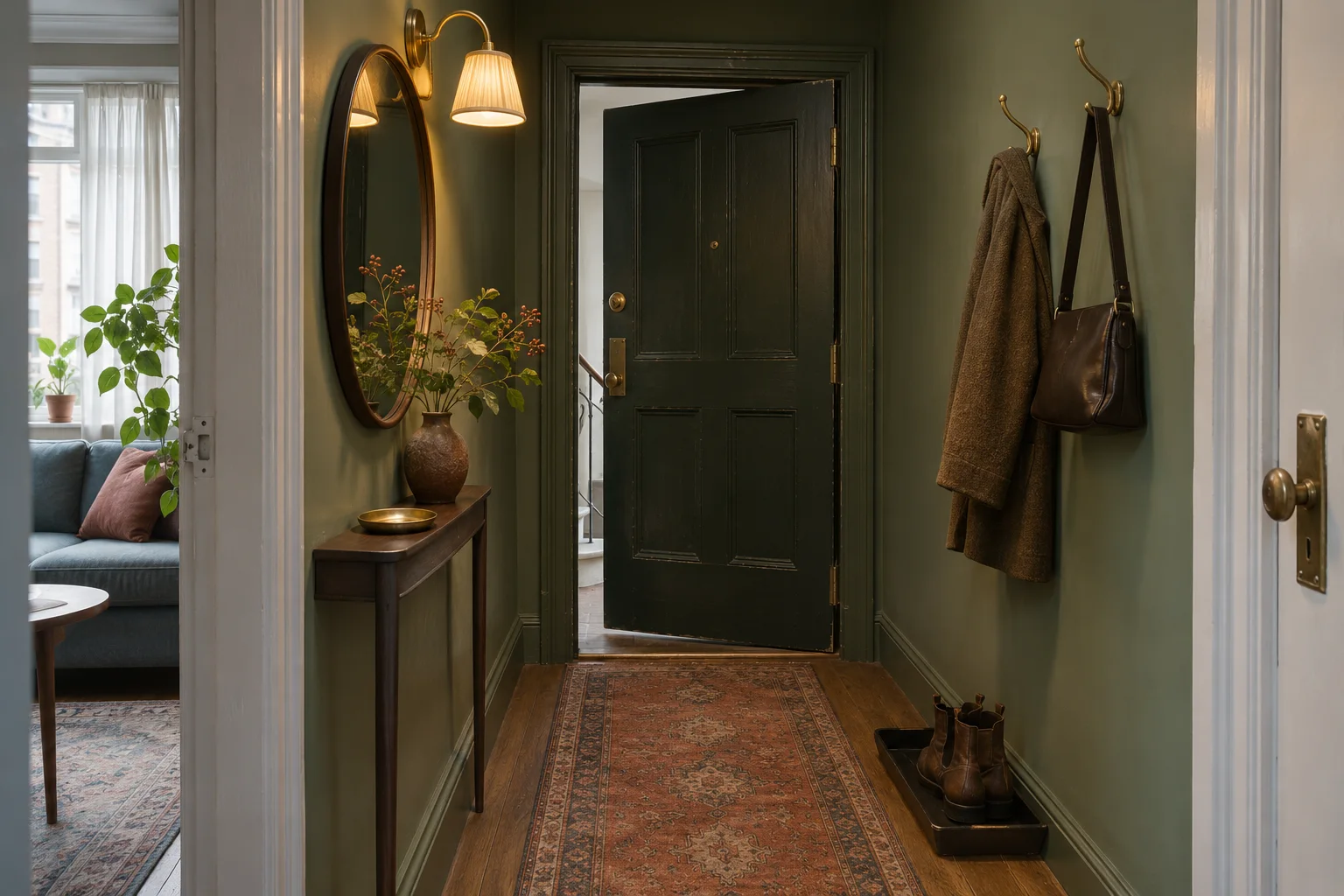
A small entryway has to work before it has a chance to look welcoming. The front door needs to open, people need somewhere to step inside, and shoes, keys, coats, and bags need places that do not spill into the rest of the home. In an apartment with no foyer, all of that may happen within a few feet of the sofa.
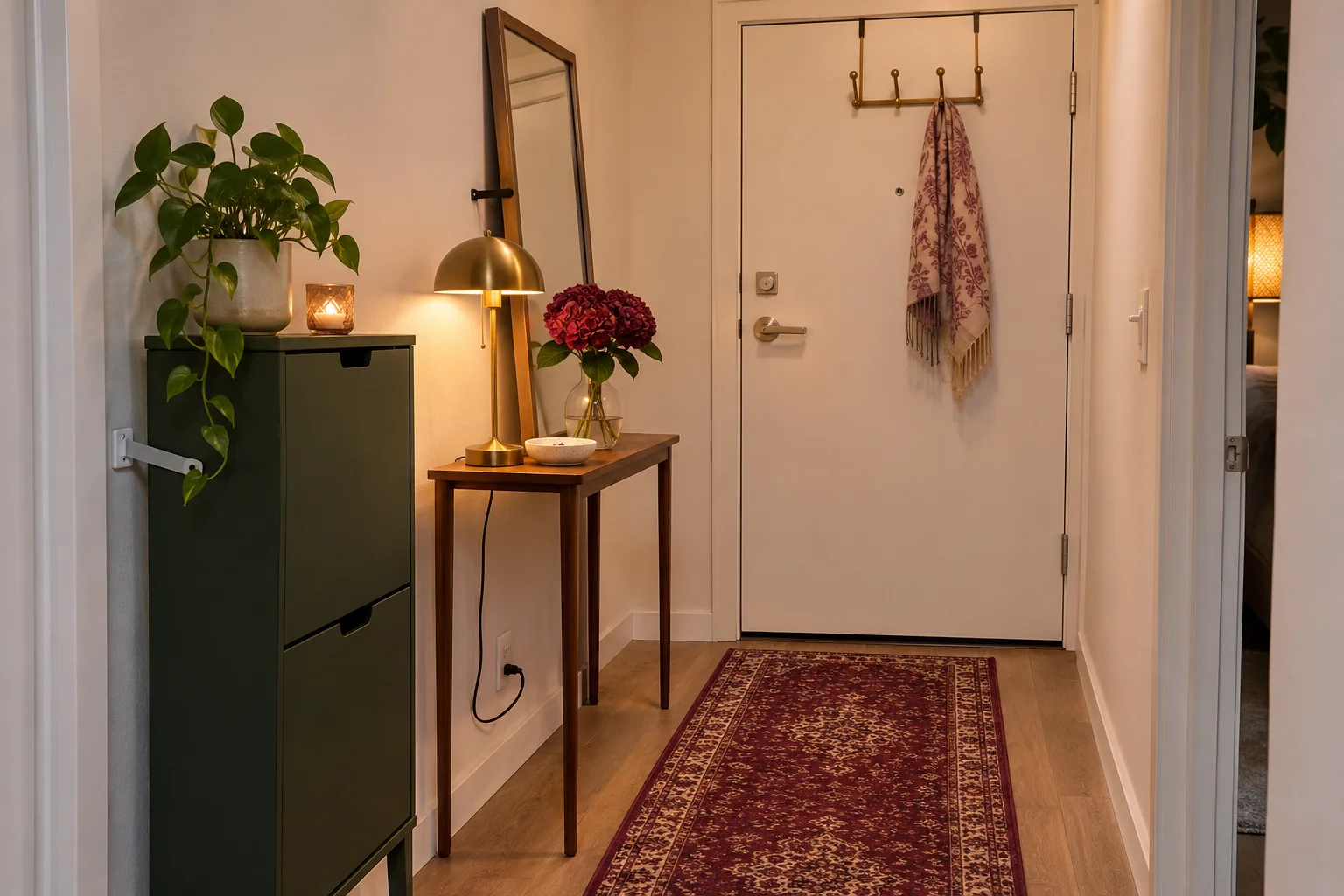
Useful small entryway ideas protect movement first. A slim shelf can catch keys without narrowing the hall. Hooks can replace a coat closet when they carry a reasonable everyday load. A washable rug can define the entrance, but only if it lies flat and does not jam beneath the door.
These twelve ideas cover narrow apartment entrances, halls with several doors, open-plan homes, rentals, and entrances without closets. None requires treating the doorway as spare storage. The route out of the home must remain clear.
Begin with the door swing and walking route
Open the front door fully and mark its arc. Do the same for nearby closet, bathroom, and bedroom doors. Measure the narrowest part of the passage, including baseboards, trim, radiators, handles, and anything projecting from the wall.
Then observe what arrives with you: shoes, a work bag, mail, keys, a stroller, an umbrella, or a pet leash. Plan for the real items rather than a generic set of baskets.
The National Fire Protection Association recommends checking that escape routes are clear and that doors and windows can open easily. An entryway cabinet that blocks the only exit is not a successful space-saving solution, even if it looks tidy.
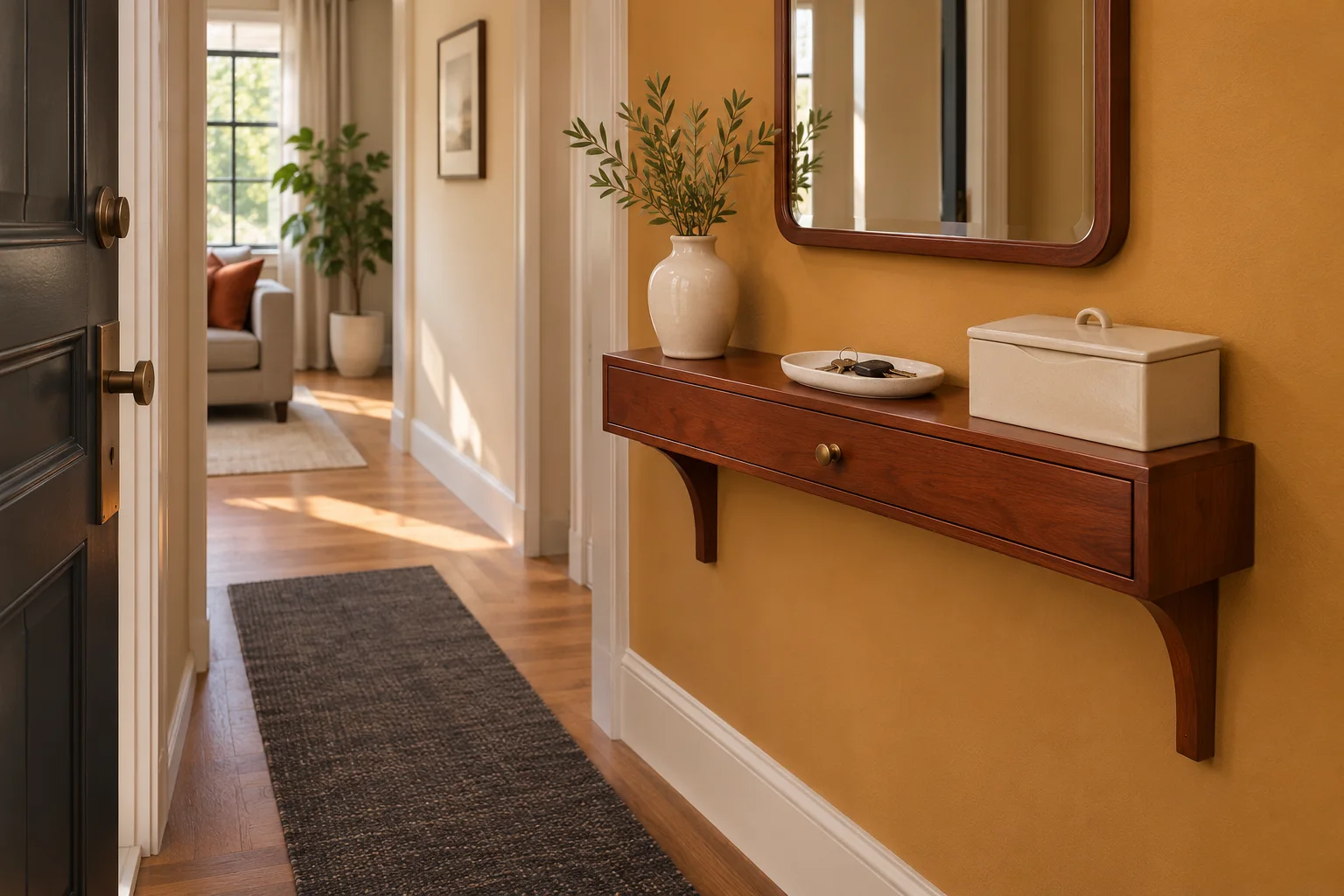
1. Choose a slim console or floating shelf
A conventional console can be too deep for a narrow hall. Look for a shallow piece that holds only the essentials: a key tray, one small mail container, and perhaps a lamp. Measure the remaining route after accounting for the furniture depth and any projecting drawer pull.
A floating shelf leaves the floor open and can be fitted at a practical height, but it requires correct mounting for the wall and intended load. Check for wiring and other hidden services before drilling. In a rental, a very narrow freestanding table may be easier to approve and move later.
Do not turn the surface into long-term mail storage. A lidded box or single file can hold items awaiting action, while recycling and finished paperwork leave the entry.
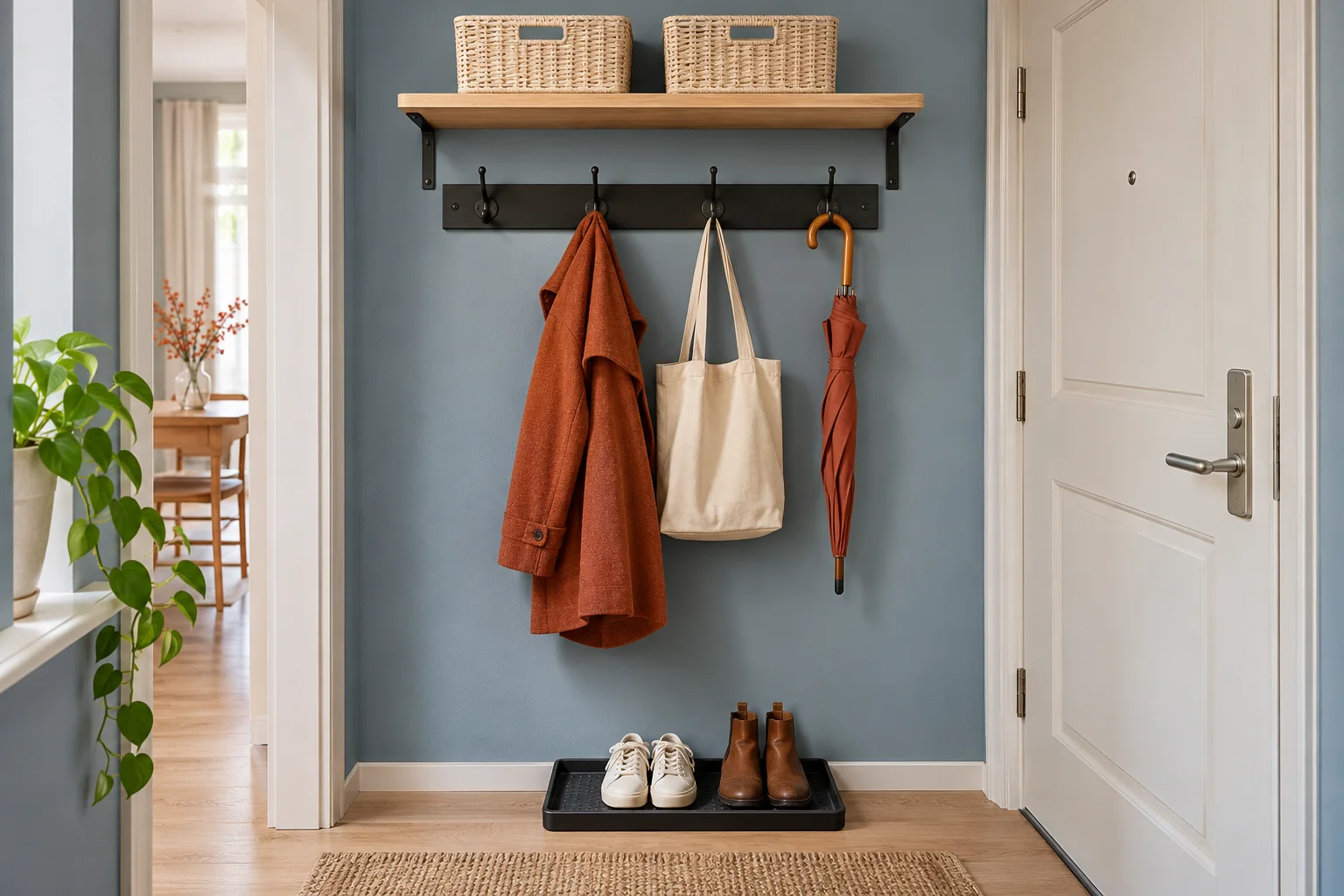
2. Use wall hooks for coats and bags
Hooks make use of vertical space and keep the floor clear. Place them where hanging items will not cover a switch, strike a door, or brush people walking past. A coat and loaded tote project much farther from the wall than an empty hook.
Mount a rail or individual hooks using hardware suited to the wall and expected load. Adhesive products can work for lightweight items on approved surfaces, but their limits vary. A heavy backpack full of books should not be placed on a decorative removable hook unless the manufacturer explicitly rates that use.
Keep the everyday selection small. A row carrying every coat in the household quickly becomes a soft wall that narrows the entrance.
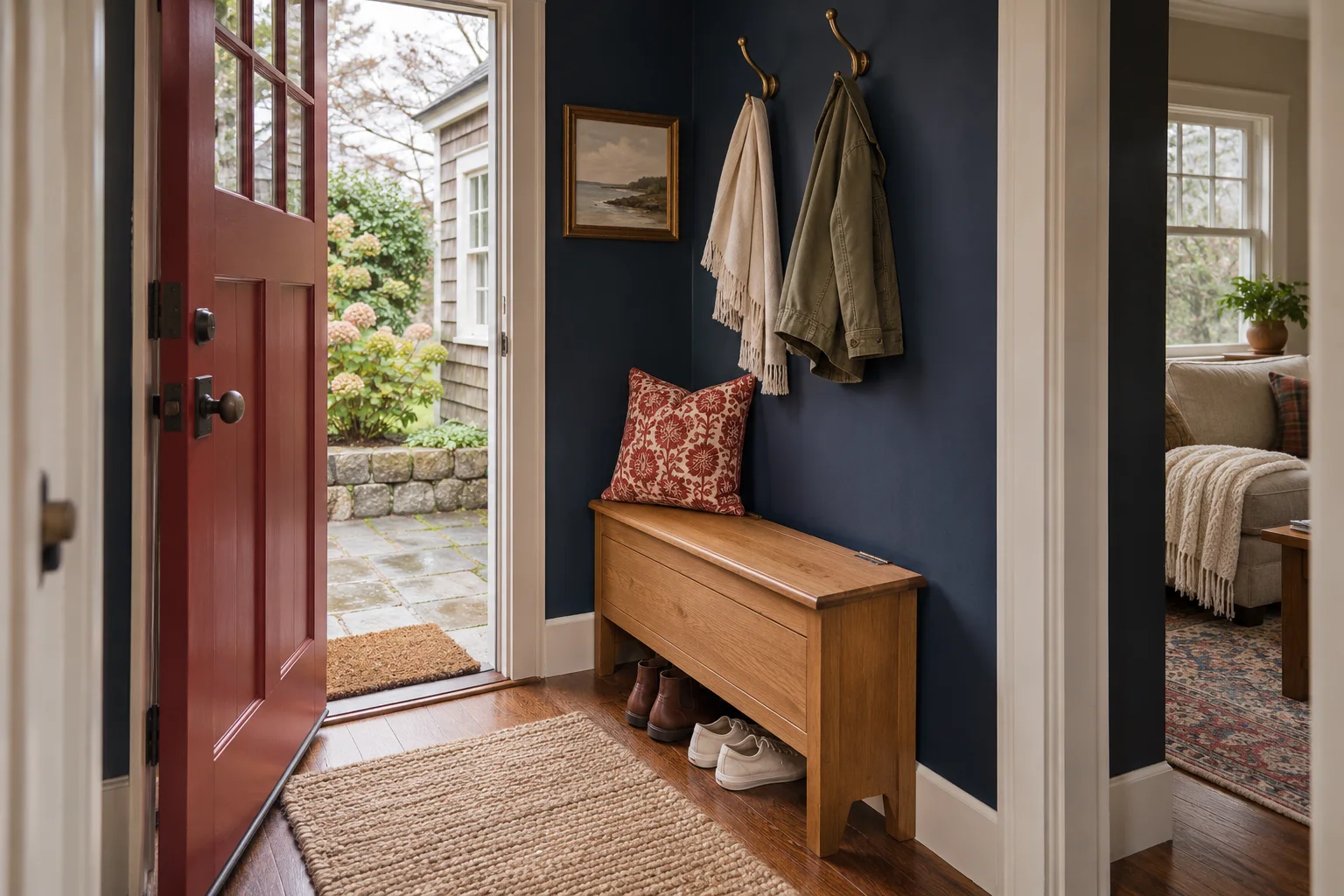
3. Add a narrow storage bench where space permits
A bench gives you somewhere to sit while putting on shoes and can hide a small amount of storage. It works only when its depth leaves the route comfortable and the lid, drawer, or baskets remain accessible.
Test the footprint with painter's tape, then place a dining chair or box of similar depth in the space. Open the front door and walk past carrying groceries. If the obstacle forces you sideways, a bench is not the right solution for that wall.
Choose a stable bench intended for sitting, not a low bookcase pressed into service. Keep shoes from spreading beyond its footprint, and avoid a thick cushion that slides into the walkway.
4. Organize shoes without building a barrier
The easiest shoe plan is often a small working collection at the door and the rest stored elsewhere. A low tray contains water and dirt. A slim cabinet can hide several pairs, provided it is stable, opens safely, and does not reduce the route too far.
Measure your largest shoes and boots before choosing storage. Some shallow cabinets fit low shoes but not larger sizes. Open shelves need enough clearance to retrieve a pair without pulling the unit into the hall.
Tall freestanding shoe cabinets may require anchoring according to the manufacturer. The U.S. Consumer Product Safety Commission advises securing top-heavy furniture to reduce tip-over risks. Rental status does not remove that safety need; request permission for the appropriate restraint.
5. Put a mirror where it supports the routine
A mirror near the door is useful for a last check and can reflect daylight into a dark entrance. Before hanging it, stand in the normal approach and see what the mirror will show. Reflecting a window or open room can add light, while reflecting a crowded hook wall may double the visual clutter.
Choose a scale that fits the wall without interfering with doors. Heavy mirrors require hardware appropriate for their weight and the wall type. A large leaning mirror still needs a safety restraint, particularly around children and pets.
If the only available spot is behind a door, check that the handle and mirror cannot collide.
6. Create a compact key-and-mail drop zone
Keys, mail, and chargers tend to migrate because they arrive in your hands. Give them one shallow, easy-to-reach place. A tray for keys and a vertical file for current mail can be enough.
Separate incoming from stored paperwork. Recycle unwanted mail promptly, move bills or action items to the place where they are handled, and keep private documents away from an exposed entry if that matters in your household.
Mounting a dedicated organizer is optional. A tray on a slim console works well and is easy to move. The system should be simple enough to use while carrying a bag or closing the door.
7. Use vertical storage carefully
An upper shelf can hold hats or light seasonal baskets when the lower wall is already occupied. Place rarely used items higher and daily items at an easy reach. Labels help when baskets cannot be seen from below.
Do not put heavy or breakable objects above the main route or a bench. Shelves need anchors selected for the wall construction and total loaded weight. Follow the shelf instructions and get professional help when the structure or concealed services are uncertain.
One shallow shelf and hook rail usually look calmer than several unrelated wall organizers. Leave room around the arrangement so the entrance does not feel like a storage locker.
8. Improve entryway lighting
The entrance needs enough light to unlock the door, find shoes, and see trip hazards. A ceiling fixture may provide general light, while a small shaded lamp or wall light can make the space feel more welcoming.
Plug-in lamps are flexible for renters, but cords must stay away from the door, damp footwear, and walking routes. Do not run a cord under a rug. Hardwired work should be completed by a qualified professional where required.
If the entrance borrows light from the living room, avoid placing a tall opaque unit where it blocks that light. A mirror can redirect some available daylight, but it does not replace adequate illumination at night.
9. Choose a durable rug that lies flat
An entry rug catches dirt and visually marks the arrival zone. Choose a size that clears the door in its full swing and leaves edges outside the busiest pivot points. Low-profile construction is often easier beneath a door than a thick pile.
Use a suitable nonslip pad where needed and check the combination regularly. Corners that curl or slide can become trip hazards. Consider how the material handles wet shoes, cleaning, and the climate where you live.
Pattern can be practical as well as decorative. A medium-scale design may disguise everyday marks better than a very pale solid rug.
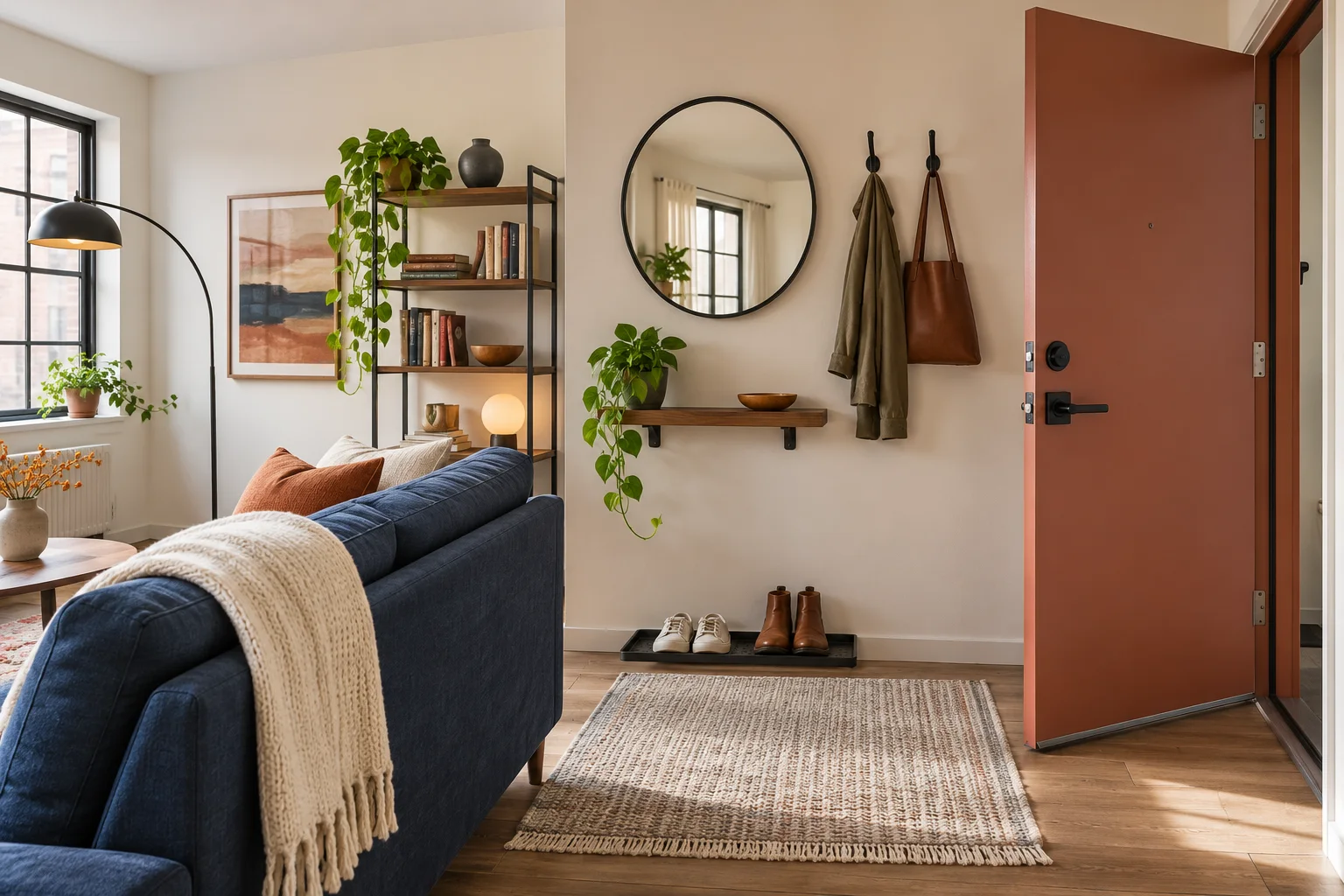
10. Define an entry in an open-plan home
When the front door opens directly into the living room, create a boundary without building a wall. A small rug, the back of a sofa, a shallow shelf, or a change in wall color can signal that the first few feet have a different job.
Position furniture so it guides movement into the room rather than creating a narrow funnel. The sofa should not sit inside the door swing or block the natural route to the kitchen and other rooms.
Repeat one material or color from the living area in the entry setup so the zones feel related. For more ways to organize a compact open room, see our small apartment decor ideas.
11. Add character without filling every surface
An entryway can be memorable with one piece of art, an interesting mirror, a patterned rug, or a strong wall color. It does not need a tray, vase, lamp, stack of books, plant, and seasonal display all competing on a six-inch shelf.
Choose one focal point and leave the practical surfaces usable. If a console holds keys and mail, hang the art above it rather than crowding the top. A single durable branch or small bowl can add texture without becoming another obstacle.
Use plants only where the available light and care routine suit them. Keep pots away from door movement and protect the floor from water.
12. Use reversible solutions in rentals
Start with a washable runner, narrow freestanding furniture, an over-door hook that allows the door to close, and a plug-in lamp. Check the lease before drilling, painting, attaching hardware, or replacing a fixture.
Removable hanging products must match the surface and load. Follow preparation and removal instructions, and do not use them for valuable or excluded items. Test how an over-door rack affects the frame, weather seal, and closing action before loading it.
Safety restraints may still be necessary for tall furniture and large mirrors. Discuss approved attachment and repair methods with the property owner rather than leaving the item unstable.
A practical entryway plan by problem
No coat closet: Use a securely mounted hook rail for the current season, then keep off-season outerwear somewhere else. Add a light upper basket only if it can be reached safely.
Several doors in one hall: Keep the floor mostly clear. A shallow shelf and mirror may be more useful than any freestanding cabinet.
Shoes spread into the walkway: Limit the door-side collection, add one tray or low shelf, and move occasional pairs to bedroom or closet storage.
The home opens into the living room: Define the entry with a rug and one small wall-based drop zone. Do not force a console into the door route simply to imitate a foyer.
A very narrow rental: Focus on light, a small key tray, and one approved hook location. The best design may involve less furniture, not a more elaborate organizer.
Common small entryway mistakes
Measuring the closed door only. Furniture has to work with the door, drawers, and nearby rooms in use.
Letting hooks become long-term storage. Bulky coats and bags can take away more walkway width than the hardware suggests.
Choosing a deep shoe cabinet for capacity. More storage is not helpful if people cannot pass it comfortably.
Covering an escape route. NFPA guidance emphasizes clear routes and usable doors and windows. Keep the path out of the home free of furniture and stored items.
Frequently asked questions
How do I make an entryway when the door opens into the living room?
Use a rug, shallow wall shelf, mirror, or furniture orientation to define the first few feet. Preserve the door swing and main route into the home, then connect the entry to the living room with a repeated color or material.
What furniture works in a very narrow entryway?
A floating shelf, shallow console, low shoe tray, or narrow bench may work, depending on the measurements. Tape the footprint on the floor and test the route with the door and storage fully open.
How can I store coats without a closet?
Use a properly mounted rail or a limited number of hooks for current everyday coats. Keep off-season pieces elsewhere and avoid loading the wall until hanging garments narrow the passage.
Are adhesive hooks safe for bags?
Only when the exact product is approved for the surface, environment, item dimensions, and loaded weight. Follow preparation and waiting instructions. Heavy bags may need mechanically fastened hardware.
How can I make a rental entryway feel finished?
Choose a properly sized runner, one lamp, a narrow freestanding storage piece, and a small amount of art or color. Confirm lease rules and do not skip restraints required for tall furniture or mirrors.
Sources
- National Fire Protection Association: Home fire escape planning for keeping escape routes clear and doors and windows usable.
- U.S. Consumer Product Safety Commission: Anchor It for furniture tip-over prevention and anchoring guidance.
- 3M: Command picture-hanging selection guide for product-specific surface, size, and load limitations.
Image note: The entryway images in this article are AI-generated conceptual illustrations. They do not document a real apartment, installed storage system, or first-hand product test.